If you have spent any time researching coffee beans for your cafe, you have almost certainly encountered this debate. Arabica or Robusta? Smooth or strong? Premium or practical? The internet is full of opinions, most of them written by specialty coffee enthusiasts who have never managed a commercial kitchen serving 200 cups a day.
This guide cuts through the noise and gives every cafe owner and restaurant operator in India a clear, practical answer. Not based on what tastes best to a coffee blogger — but based on what actually works in your menu, your machine, and your business.
Why This Decision Matters More Than You Think
The Arabica versus Robusta question is not just about flavour preference. It affects your cost per cup, your machine performance, your crema quality, your customer retention, and ultimately your profitability. Making the wrong choice — even if the beans are technically good — can result in consistently disappointing cups that drive customers away without you ever knowing why.
In India’s growing cafe market, customers are more discerning than ever. A bad cup remembered is a customer lost. Getting your bean selection right is one of the highest-leverage decisions in your entire cafe operation.
Arabica: The Flavour-Forward Choice
What Is Arabica?
Arabica (Coffea arabica) accounts for approximately 60 percent of global coffee production and is widely considered the premium variety for specialty and commercial cafe use. In India, Arabica is cultivated primarily in Karnataka — in the famous districts of Coorg and Chikmagalur — as well as in parts of Kerala and Tamil Nadu.
Arabica plants grow best at elevations between 600 and 2,000 metres. The higher altitude, cooler temperatures, and slower bean development allow complex sugars, acids, and aromatic compounds to build inside the bean. The result is a more nuanced, flavourful cup with significantly more variety in taste profile than Robusta.
How Arabica Tastes
Arabica has a smoother, gentler character than Robusta. The bitterness is mild, the body is light to medium, and the acidity is noticeable but pleasant — like the bright, clean finish of a good tea. Depending on the origin and roast level, Arabica can produce flavour notes ranging from stone fruit and berries to milk chocolate, caramel, and nuts.
When properly extracted, a straight Arabica espresso shot is something worth sipping slowly. It has complexity, balance, and a clean aftertaste that lingers pleasantly.
Arabica in an Indian Cafe Context
Arabica works exceptionally well in specialty cafe contexts — pour-over stations, single-origin espresso menus, cold brew offerings, and any menu where the coffee is the centrepiece and customers are paying for the experience of a distinctive, flavourful cup.
It is also the right choice for cafes building a brand around quality and positioning themselves above the standard commercial cafe experience. Customers who value specialty coffee will notice and appreciate a well-sourced Arabica, and they will return specifically for it.
Arabica is the right choice when:
- Your menu features specialty or single-origin coffee as a selling point
- You have trained baristas who understand extraction
- Your machine is calibrated for light to medium roast profiles
- Your customer base is willing to pay a premium for quality
- You serve pour-over, filter, or cold brew alongside espresso
Arabica Pricing in India (2026)
Quality commercial-grade Arabica blends for espresso typically range from ₹600 to ₹1,200 per kg. Specialty single-origin Arabica from premium origins like Coorg, Araku Valley, or certified organic estates can range from ₹1,500 to ₹2,500 per kg or more.
Robusta: The Commercial Workhorse
What Is Robusta?
Robusta (Coffea canephora) is the second most produced coffee variety in the world, and India is among its top global producers. Indian Robusta is grown predominantly in Kerala, Karnataka, and Andhra Pradesh, typically at lower elevations than Arabica.
The name Robusta is well-earned. These plants are hardier, more resistant to disease and pests, produce a higher yield per plant, and grow in a wider range of conditions than Arabica. All of these factors contribute to lower cost of production — and a lower price for buyers.
Robusta beans contain nearly twice the caffeine of Arabica, which contributes both to their bitterness and to that distinctive strong, bold character that many traditional coffee drinkers in India specifically seek out.
How Robusta Tastes
Robusta has a strong, direct flavour profile. It is earthy, bold, and notably bitter, with very little of the fruit acidity or delicate complexity found in Arabica. The body is full and heavy. The finish is long and persistent.
To a specialty coffee palate trained on single-origin Arabica, pure Robusta can seem harsh and one-dimensional. But in the right context — blended into an espresso, prepared as South Indian filter coffee, or mixed with hot milk — Robusta’s strength becomes a genuine asset rather than a flaw.
Robusta in an Indian Cafe Context
Robusta is the foundation of South Indian coffee culture. The traditional South Indian filter coffee — decoction brewed through a metal drip filter, combined with hot milk and sugar — is built around Robusta’s bold, strong character. No amount of premium Arabica will replicate the authentic flavour and body that Robusta delivers in this preparation.
In commercial espresso applications, Robusta plays a critical role in creating thick, stable crema. The higher oil and protein content in Robusta beans produces the dense, caramel-coloured foam that makes a visually appealing espresso shot and contributes body to milk-based drinks. Many espresso blends worldwide use 20 to 40 percent Robusta specifically for this reason.
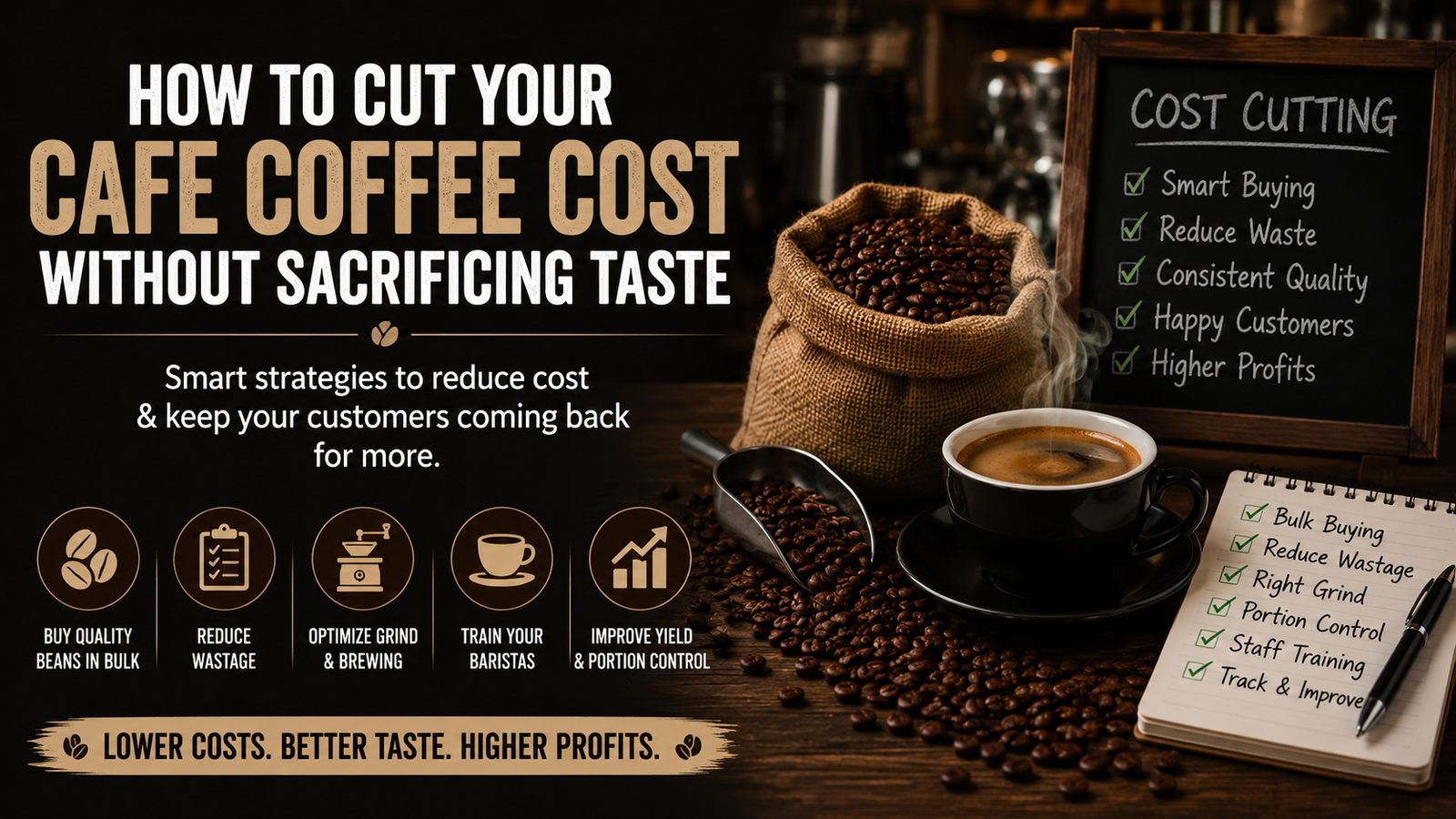
Robusta is also the cost-efficient backbone of high-volume operations. At ₹250 to ₹700 per kg versus ₹600 to ₹2,500 for Arabica, a Robusta-forward blend can significantly reduce cost per cup while still delivering a satisfying, strong coffee experience that the majority of Indian cafe customers enjoy.
Robusta is the right choice when:
- You serve South Indian filter coffee as your primary offering
- You are building or using espresso blends that need body and crema
- You operate a high-volume canteen, hotel, or restaurant where consistency and cost control are priorities
- Your customer base prefers strong, traditional coffee
- You want to reduce cost per cup without compromising perceived strength
Robusta Pricing in India (2026)
Commercial-grade Indian Robusta typically ranges from ₹250 to ₹500 per kg. Premium-grade Robusta from quality-conscious estates in Kerala or Karnataka can reach ₹600 to ₹700 per kg. The price advantage over Arabica is substantial and consistent.
Arabica vs Robusta: Direct Comparison
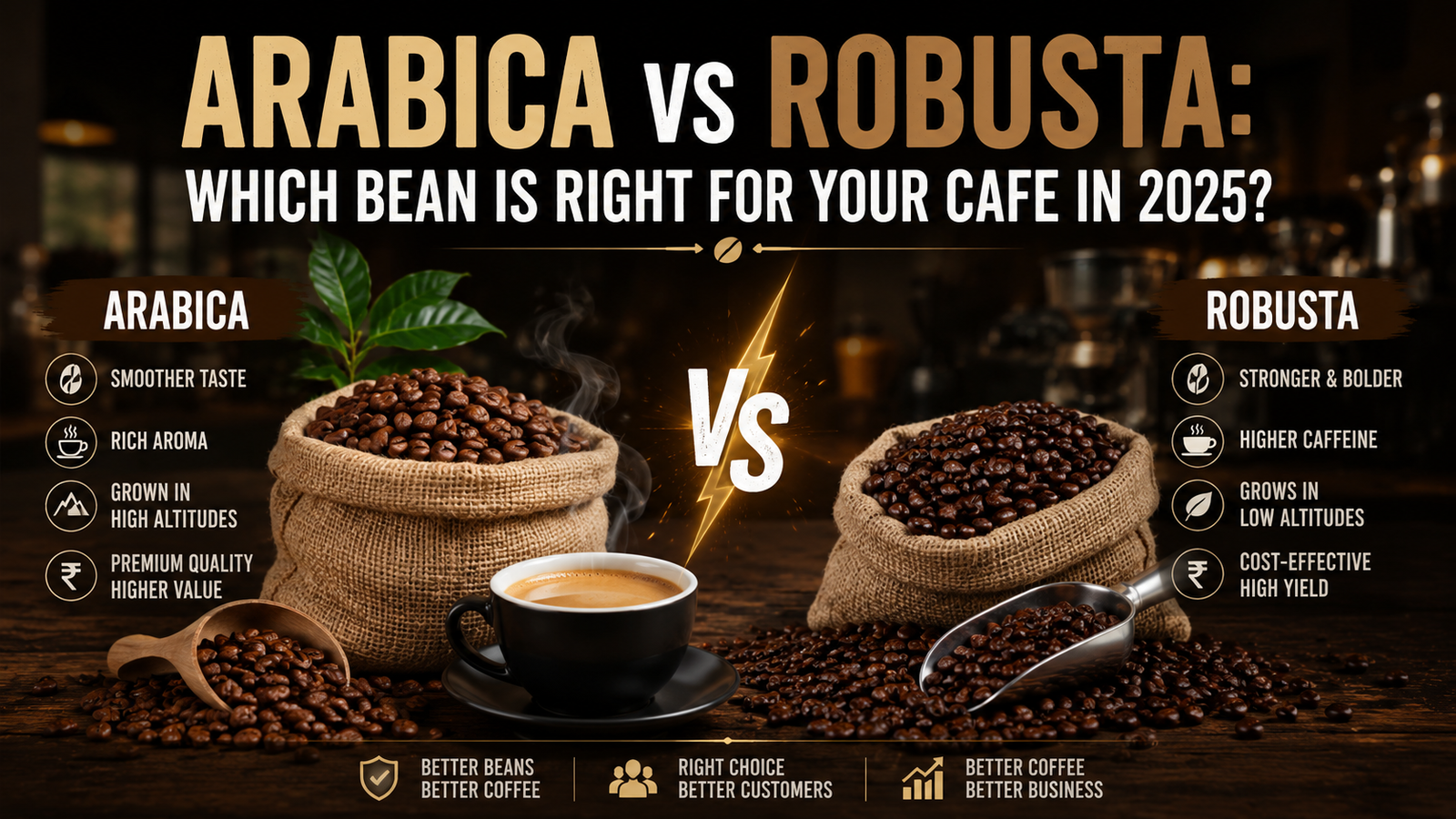
| Feature | Arabica | Robusta |
|---|---|---|
| Flavour | Smooth, fruity, complex | Bold, earthy, bitter |
| Bitterness | Low to medium | High |
| Acidity | Medium to bright | Low |
| Body | Light to medium | Full, heavy |
| Caffeine | Lower (~1.2%) | Higher (~2.2%) |
| Crema | Moderate | Thick, stable |
| Price per kg | ₹600 – ₹2,500 | ₹250 – ₹700 |
| Best use | Specialty espresso, filter, cold brew | Filter coffee, espresso blends, high-volume |
| Shelf sensitivity | More sensitive | More forgiving |
| Growing altitude | 600 – 2,000m | 0 – 800m |
The Blend Option: Getting the Best of Both
Here is the truth that most online coffee debates miss entirely: the majority of the world’s best commercial espresso is made from a blend of Arabica and Robusta — not from either variety alone.
A well-designed blend combines the flavour complexity and smoothness of Arabica with the body, crema stability, and cost efficiency of Robusta. The result is a coffee that is more versatile, more consistent, and more forgiving in a commercial environment than either pure variety.
A typical commercial espresso blend in an Indian cafe context is 60 to 70 percent Arabica and 30 to 40 percent Robusta. The Arabica component delivers the flavour notes that make the coffee interesting and pleasant to drink. The Robusta component delivers the crema, body, and strength that make the coffee feel satisfying and look visually impressive in the cup.
If you are currently using 100 percent Arabica and your shots feel thin or your crema disappears too quickly, adding 20 to 30 percent Robusta to your blend will address both issues immediately.
If you are currently using 100 percent Robusta and your coffee tastes too harsh or one-dimensional, replacing 30 to 40 percent with Arabica will introduce the balance and complexity that turns a functional cup into a memorable one.
How to Choose: A Decision Framework for Indian Cafe Owners
You should lean toward Arabica if:
Your cafe is positioned as a specialty or artisan coffee destination. You have trained baristas and precise extraction equipment. Your customers are willing to pay ₹150 to ₹250 or more for a single espresso. Your menu features single-origin offerings, pour-over, or cold brew as key items. You want to differentiate your cafe on coffee quality in a competitive market.
You should lean toward Robusta if:
You serve South Indian filter coffee as your primary or secondary offering. You operate a high-volume restaurant, hotel, or canteen where consistency and cost control are paramount. Your customers prefer strong, bold, traditional coffee over nuanced specialty cups. You need to manage cost per cup tightly without reducing perceived quality.
You should use a blend if:
You serve a standard espresso-based menu — cappuccinos, lattes, Americanos, cold coffees — at moderate to high volume. You want the crema and body of Robusta with the flavour depth of Arabica. You want a cost-effective, commercially forgiving bean that performs consistently across different barista skill levels. This describes the majority of cafes across India, and a quality Arabica-Robusta blend is the right answer for most of them.
What About Green Coffee Beans?
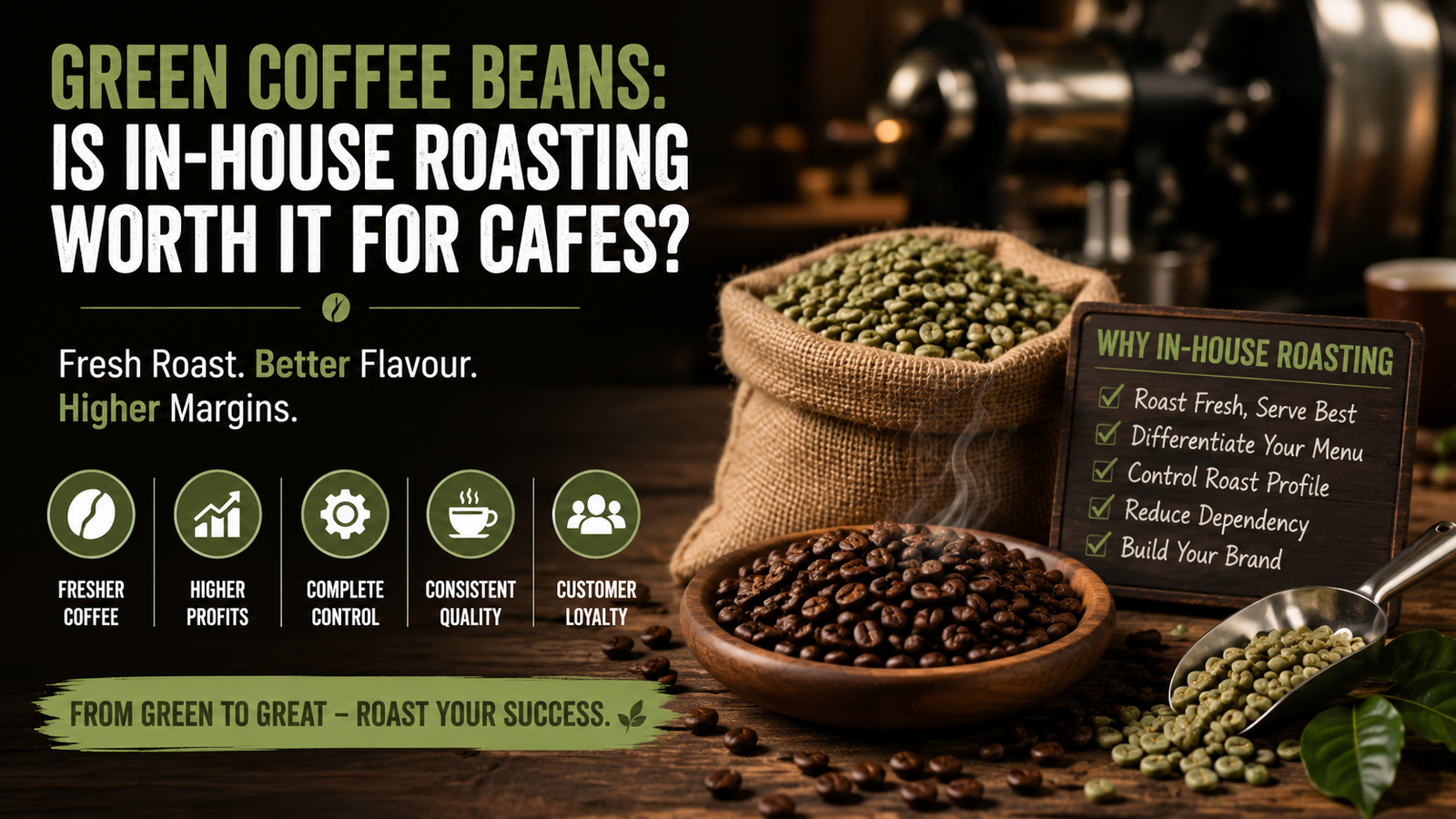
Green coffee beans — unroasted raw beans — are available in both Arabica and Robusta varieties and are used by cafes that roast in-house. In-house roasting gives complete control over roast profile and can reduce bean cost, but it requires significant equipment investment, skill development, and time.
For most commercial cafes in India, purchasing pre-roasted beans from a reliable supplier is the more practical and cost-effective approach. In-house roasting makes sense only if your cafe’s brand identity is built around the roasting process itself.
Getting the Right Bean for Your Machine
One final point that is frequently overlooked: the bean you choose must be compatible with your machine’s extraction parameters.
Commercial automatic espresso machines are typically calibrated for medium to medium-dark roast profiles. They operate at fixed temperatures, pressures, and extraction times. Using a very light-roast Arabica in a machine set up for a medium-dark commercial blend will result in under-extraction — sour, thin, unpleasant shots that frustrate customers regardless of how premium the beans are.
If you are unsure which bean profile is right for your specific machine, consult your equipment supplier before ordering. At Neelkanth Enterprise, we help every customer match the right coffee beans to their specific machine model and drink menu — because even the best beans produce poor results in the wrong setup.
Conclusion
The Arabica versus Robusta debate does not have a single right answer — it has the right answer for your cafe, your menu, your machine, and your customers.
Arabica for flavour complexity and specialty positioning. Robusta for strength, crema, and cost efficiency. A well-designed blend for the best of both in a standard commercial cafe context.
Understand your operation, know your customers, and match your bean to both. That decision, made correctly, is one of the most impactful improvements you can make to your cafe’s coffee quality and profitability in 2026.
Neelkanth Enterprise supplies premium Arabica beans, Robusta beans, custom blends, green coffee beans, and commercial premix options to cafes and restaurants across Surat and Gujarat. Contact us today to request a sample or get a personalised recommendation for your cafe.