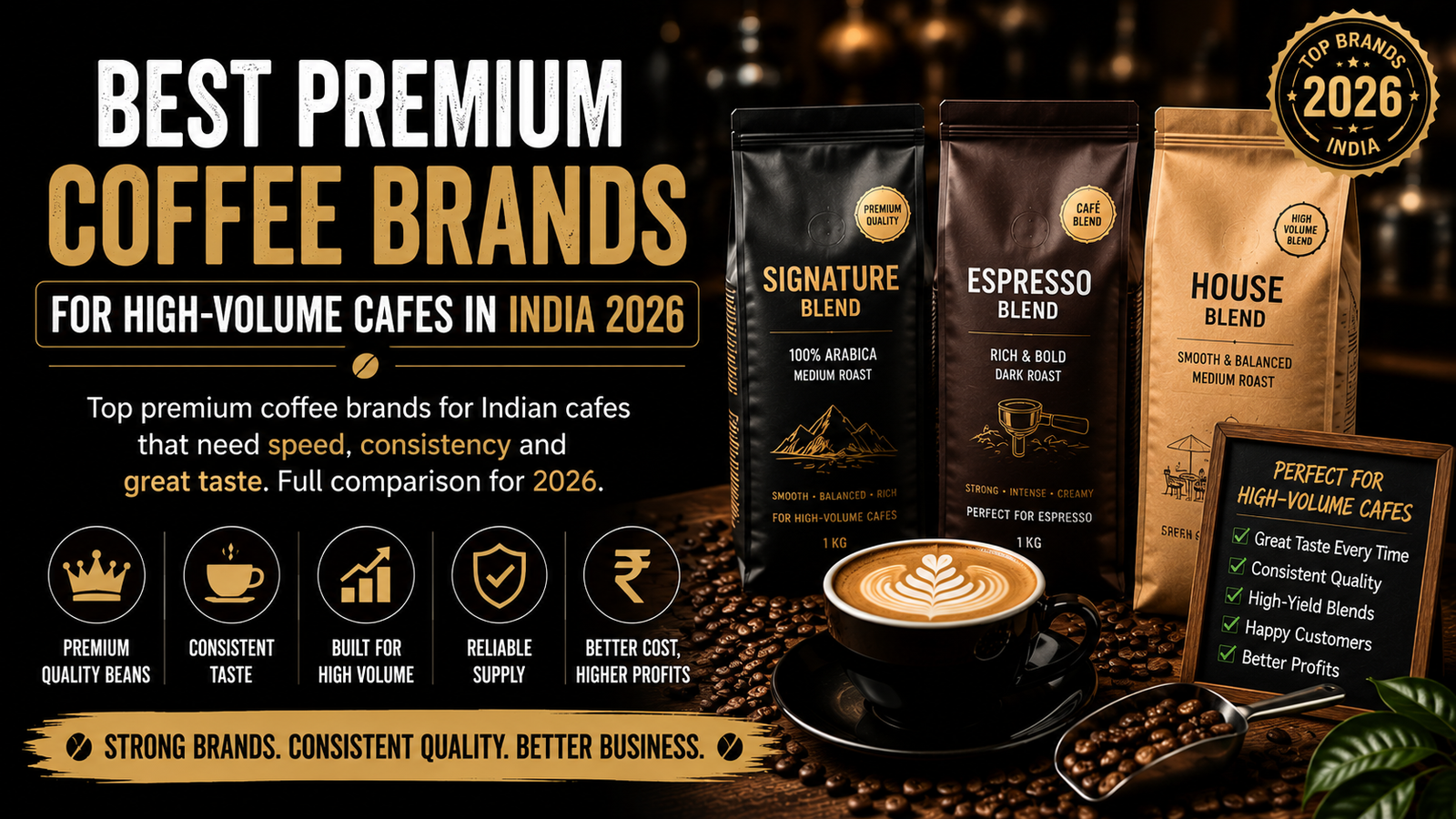
Speed, consistency, and quality — in a high-volume cafe or restaurant, you need all three from your coffee program simultaneously. A skilled barista pulling single shots on a manual espresso machine is wonderful in a specialty cafe with 40 covers. It is a bottleneck in a hotel breakfast service, a corporate canteen, or a quick-service restaurant handling 300 coffee orders before noon.
This is exactly the context where premix coffee shines. And in 2026, the Indian premix coffee market has matured to the point where cafe owners and F&B managers have genuinely good options across every price point and quality tier.
This guide covers everything you need to know about premix coffee for high-volume Indian operations — what it is, how it compares to fresh-ground espresso, and which brands and formats are worth considering for your specific setup.
What Is Premix Coffee?
Premix coffee is a pre-blended powder formulation that combines soluble or spray-dried coffee with other ingredients — typically dried milk powder, sugar, and flavour modifiers — in a precise ratio. When mixed with hot water, it produces a consistent, ready-to-drink coffee beverage in seconds with no grinding, no extraction, and no barista technique required.
Premix coffees are designed for use with automatic vending machines and hot water dispensers. The machine measures a fixed quantity of premix powder per cup, adds hot water at a programmed temperature, and dispenses the drink — all within 15 to 20 seconds. One machine can produce hundreds of consistent cups per day with no skilled operator involvement beyond routine maintenance and restocking.
In India, premix coffee has been a staple of corporate offices, hotels, canteens, and institutional food service for decades. In recent years, it has become increasingly relevant to cafes and restaurants seeking to supplement their barista-made espresso program with a consistent, cost-effective solution for specific service contexts.
Premix vs Fresh-Ground Espresso: When to Use Each
Before exploring specific brands, it is important to be clear about what premix coffee is and is not suited for. Premix and fresh-ground espresso are not competing products — they are tools for different contexts.
Fresh-ground espresso from quality beans, pulled by a trained barista, produces a cup that no premix product currently matches for flavour complexity, aroma, and the sensory richness that specialty coffee drinkers seek. If your cafe’s brand identity is built on coffee quality, fresh-ground espresso should remain the foundation of your beverage program.
Premix coffee delivers speed, consistency, and cost efficiency that fresh-ground espresso cannot match at high volume with untrained staff. For a hotel serving 200 breakfast guests in 90 minutes, a corporate canteen dispensing coffee to 500 employees across a morning, or a restaurant needing a reliable coffee option at a service point without dedicated barista coverage, premix is the right tool.
The smartest high-volume operations use both. Fresh-ground espresso at the main cafe counter for customers who order specialty drinks. Premix at secondary service points, banquet setups, room service, or self-service stations where volume, speed, and staff efficiency matter more than artisanal quality.
What to Look for in a Premix Coffee Brand
Before comparing specific brands, here are the criteria that matter most for high-volume cafe and restaurant buyers in India.
Coffee Solids Content
The percentage of actual coffee in the premix formulation is the single most important quality indicator. Premium premix products contain 15 to 25 percent or more of soluble coffee solids. Budget products may contain as little as 3 to 8 percent, with the rest being flavourings, maltodextrin, and other fillers. Higher coffee solids means more authentic flavour, better aroma, and a cup that tastes closer to real coffee.
Always ask the supplier for the coffee solids percentage before committing to a product. This information should be readily available.
Milk Powder Quality
Most premix coffees include dried milk powder as part of the blend. The quality of this milk powder significantly affects the creaminess, mouthfeel, and overall palatability of the final cup. Premium products use whole milk powder or high-grade skimmed milk powder. Budget products may use cheaper dairy alternatives or non-dairy creamers that produce a thin, artificial mouthfeel.
Dispensing Compatibility
Not all premix coffees work equally well in all vending machines. Some formulations are optimised for specific dispensing temperatures and water ratios. Always verify compatibility between your premix product and your machine before placing a bulk order.
Shelf Life and Packaging
High-quality premix is typically packaged in sealed aluminium foil pouches or airtight canisters to prevent moisture absorption and maintain flavour integrity. Packaging that allows moisture entry degrades the product rapidly and produces clumped, poor-tasting coffee. Check shelf life — quality premix should offer 12 to 18 months from the manufacturing date in proper storage.
Customisation Options
Some suppliers offer custom premix formulations — adjusting sweetness levels, coffee strength, milk ratio, or flavour profile to match your specific preferences. For high-volume buyers, custom formulation can significantly improve product fit and customer satisfaction.
Types of Premix Coffee Available in India
The Indian premix market offers several distinct product categories, each suited to different service contexts.
3-in-1 Premix (Coffee + Milk + Sugar)
The most widely available format. A single-portion sachet or a bulk canister blend containing coffee, milk powder, and sugar in a fixed ratio. Dispenses a complete, ready-to-drink cup with hot water only. Ideal for self-service stations, hotel rooms, and corporate pantries where simplicity and consistency are priorities.
The limitation of 3-in-1 premix is inflexibility — customers cannot adjust sweetness or strength. For cafes where customer preference variation is expected, this format can frustrate some guests.
2-in-1 Premix (Coffee + Sugar, No Milk)
A blend of coffee and sugar without milk powder. Hot water produces a black sweet coffee. Hot milk produces a complete coffee drink. This format allows the cafe to control the milk quality and quantity independently, which is preferable for operations that already maintain fresh milk supply.
2-in-1 premix gives more flexibility in presentation and allows the use of different milk types — full-fat, skimmed, or plant-based — according to customer preference.
Unsweetened Coffee Premix (Black Soluble Coffee)
Pure soluble coffee powder with no added milk or sugar. Maximally flexible — staff or customers can add milk and sugar to preference. Used in operations where customisation matters, or where the coffee is a component in a larger recipe rather than a standalone drink.
High-quality unsweetened coffee premix from quality origins can produce a genuinely impressive cup of black coffee that compares favourably to filter coffee in a casual dining context.
Flavoured Premix (Cappuccino, Mocha, Hazelnut)
Specialty flavoured premix products that simulate cappuccino, mocha, hazelnut, vanilla, and other popular coffee shop beverages. These are widely used in corporate settings and institutional food service where variety is valued over authenticity.
Flavoured premix performs best in settings where the customer is not comparing against a freshly made specialty version of the same drink. In a cafe context, positioning these alongside a fresh espresso menu requires careful thought about how they are presented.
Key Premix Coffee Brands in the Indian Market 2026
Nescafe Professional Range
Nescafe’s professional premix range is the most widely distributed in India and is available through distributors across all major cities and states including Gujarat. The range includes 3-in-1 formats, cappuccino premix, and black soluble options.
Nescafe Professional benefits from consistent supply, broad machine compatibility, and brand recognition that gives institutional buyers confidence. The coffee solids content is moderate — the product is designed for mass-market palatability rather than specialty flavour. For corporate canteens, hotel room service, and institutional food service, it is a reliable default choice.
It is not the strongest performer for cafes that want premix to represent their brand positively, as the flavour profile is familiar and ordinary rather than distinctive.
BRU Instant and Commercial Range
BRU from Hindustan Unilever has strong penetration in South India and is gaining ground nationally. The commercial BRU range includes strong and classic variants with a distinctly South Indian flavour profile — bold, chicory-forward, and well-suited to the South Indian coffee drinking palate that expects strength and body.
For cafes in Gujarat and across western India serving a customer base that appreciates traditional South Indian coffee character alongside modern cafe beverages, BRU commercial premix is worth evaluating. Its stronger flavour profile distinguishes it from the more neutral international brands.
Continental Coffee Premix Range
Continental Coffee, headquartered in Bengaluru, is one of India’s specialty coffee producers with estate-owned supply chains in Karnataka. Their commercial premix range benefits from access to quality Arabica and Robusta supply and positions itself at the premium end of the Indian premix market.
Continental’s premix products tend to have higher coffee solids content than mass-market competitors and produce a more authentic, flavourful cup. They are particularly well-suited for cafes and restaurants that want premix to taste close to real coffee rather than obviously instant. The price per kg is higher than mass-market alternatives, but the cost per good cup is competitive given the strength of the blend.
Seven Beans Coffee Premix
Seven Beans Coffee is an Indian specialty roaster and premix supplier with a strong focus on quality and provenance. Their commercial premix range uses higher-grade coffee inputs than most mass-market products and is available in several strength and flavour variants.
For cafes seeking a premix partner that aligns with specialty coffee values — better sourcing, higher coffee solids, more authentic flavour — Seven Beans is worth exploring. They also offer customisation options for high-volume buyers.
Generic and House-Brand Premix from Regional Suppliers
Across Gujarat and India, regional coffee suppliers including Neelkanth Enterprise offer house-brand or sourced premix products tailored to local taste preferences and machine compatibility. These products can offer excellent value for money — comparable or superior quality to national brands at more competitive pricing — along with the advantage of local service and supply reliability.
For cafes in Surat and across Gujarat, sourcing premix from a regional supplier like Neelkanth Enterprise also means faster restocking, personalised service, and the ability to request specific formulations based on your machine type and flavour preferences.
How to Choose the Right Premix for Your Cafe
Step 1: Define Your Service Context
Is the premix replacing fresh espresso entirely, supplementing it at secondary service points, or serving a specific function like hotel room service or canteen vending? The answer determines how much quality premium matters.
Step 2: Set a Cost-Per-Cup Budget
Calculate the cup cost you can sustain at your premix service points. Premium premix at ₹6 to ₹10 per cup is justified at a cafe counter. Institutional premix at ₹2 to ₹4 per cup is appropriate for high-volume canteen service. Know your budget before evaluating brands.
Step 3: Request Samples From Multiple Brands
Never commit to a bulk premix order without tasting the product in your actual machine at your standard dispensing settings. Taste it plain first — no extra milk or sugar. The quality of the base product is what you will be serving your customers hundreds of times per day.
Step 4: Verify Machine Compatibility
Confirm that your vending machine or dispenser is calibrated for the specific premix you are testing. Dose weight, water temperature, and dispensing cycle may need adjustment for different premix formulations.
Step 5: Evaluate Supplier Reliability
Premix runs out. When it does, you need restocking quickly. A supplier who can deliver fresh stock within 24 to 48 hours is worth more than marginally better pricing from a supplier who takes a week. For Surat and Gujarat-based operations, local suppliers with reliable delivery capability are a genuine operational advantage.
Premix Coffee Cost Comparison: What to Expect in 2026
Premix coffee pricing in India varies significantly by brand, format, and purchase volume.
Mass-market 3-in-1 premix from national brands typically ranges from ₹180 to ₹280 per kg in commercial quantities. At a standard dispensing dose of 18 to 22 grams per cup, one kilogram produces approximately 45 to 55 cups — a cost per cup of ₹3.50 to ₹6.00.
Premium and specialty premix ranges from ₹350 to ₹600 per kg in commercial quantities, producing a cost per cup of ₹6.50 to ₹13.00 depending on dose and format.
Against a fresh-ground espresso cost per cup of ₹15 to ₹25 for quality beans at standard dosing, premix represents a meaningful cost saving for high-volume service points — particularly where the labour cost of a dedicated barista is also eliminated.
Conclusion
Premix coffee is not a compromise — it is the right tool for the right context. For high-volume Indian cafes, hotels, restaurants, and institutions that need consistent, fast, cost-effective coffee at scale, a quality premix product matched to the right machine and the right service point delivers genuine value.
The key is choosing the right product — with adequate coffee solids, compatible machine formatting, reliable supply, and a flavour profile that represents your operation positively. Sample before you commit. Calculate true cost per cup. And work with a supplier who understands your operation.
Neelkanth Enterprise supplies a range of commercial premix coffee products alongside premium whole bean and green coffee options to cafes, hotels, and restaurants across Surat and Gujarat. Contact us today to discuss your requirements, request samples, or get a recommendation matched to your specific machine and service context.