A conveyor pizza oven is designed to deliver one thing above all else: consistency. Every pizza that enters the oven should come out with the same crust color, cheese melt, and overall quality.
When a conveyor oven starts heating unevenly, that consistency disappears.
You may notice some pizzas coming out overcooked while others are undercooked. One side of the pizza may be perfectly baked while the other side remains pale. Customers begin to complain, food waste increases, and kitchen operations become frustrating.
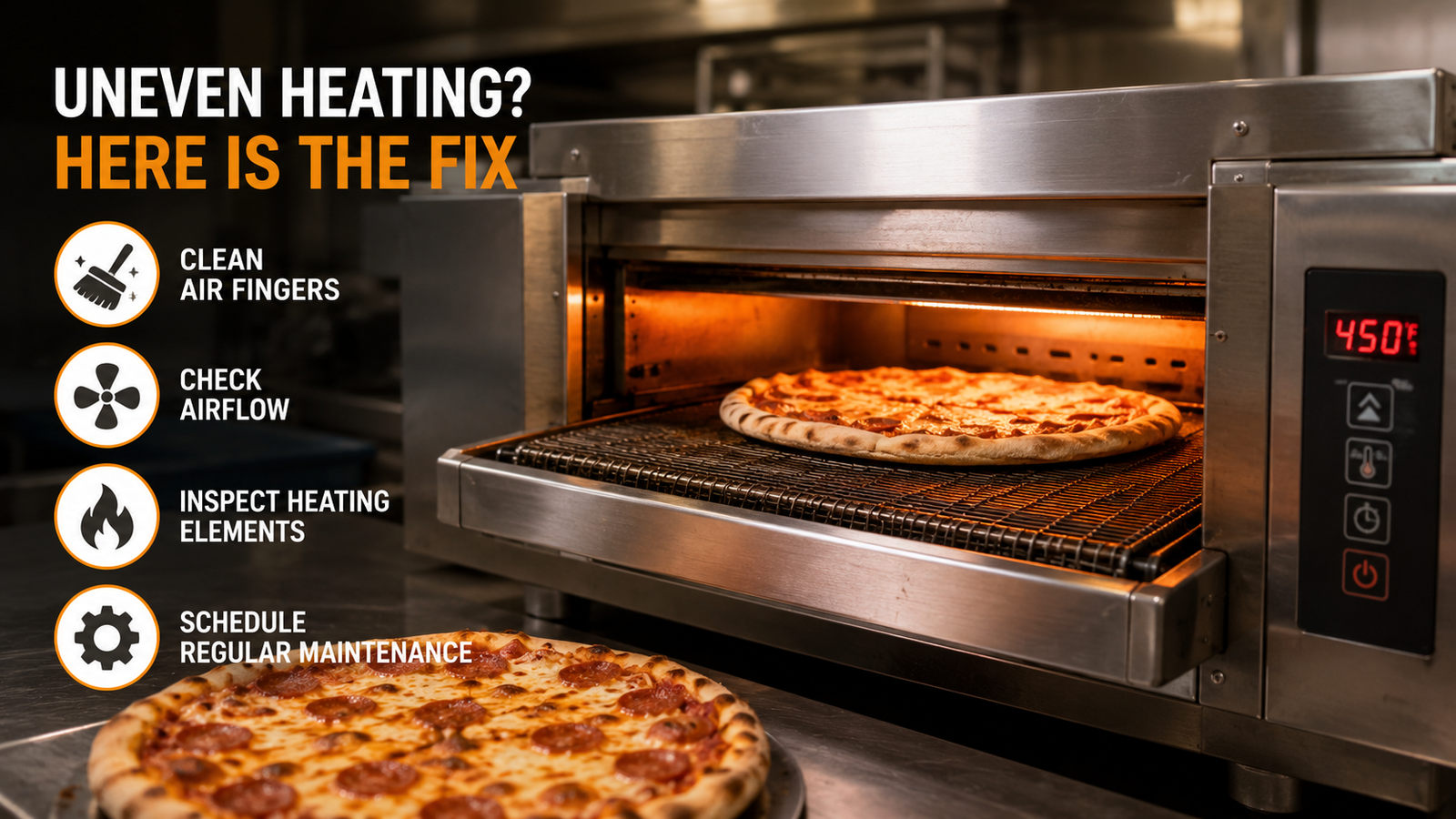
The good news is that uneven heating is usually caused by a few common issues that can be identified and fixed quickly.
In this guide, we’ll explain why conveyor ovens stop heating evenly, how to diagnose the problem, and what steps you can take to restore consistent baking performance.
Why Even Heating Matters
Uniform heating is essential for:
- Consistent pizza quality
- Faster service
- Reduced food waste
- Customer satisfaction
- Operational efficiency
When heat distribution becomes uneven, every pizza becomes a gamble.
This affects:
- Crust texture
- Cheese melting
- Topping consistency
- Overall presentation
For restaurants and cloud kitchens, consistency is critical.
Common Signs of Uneven Heating
Before diagnosing the issue, look for these warning signs:
Uneven Crust Color
One side of the pizza browns faster than the other.
Uneven Cheese Melting
Cheese melts completely in one area while remaining undercooked elsewhere.
Burnt Spots
Certain sections cook too aggressively.
Raw Sections
Parts of the pizza remain undercooked.
Inconsistent Results
The same recipe produces different outcomes throughout the day.
If these symptoms occur regularly, your oven likely has a heating distribution problem.
Cause #1: Dirty Air Fingers
Air fingers are one of the most important components inside a conveyor oven.
They direct heated air onto the pizza surface.
Over time, they can become blocked by:
- Grease
- Flour
- Cheese particles
- Food debris
Result
Airflow becomes restricted and uneven.
Some areas receive excessive heat while others receive insufficient heat.
Solution
Remove and clean air fingers according to manufacturer guidelines.
Regular cleaning often restores proper airflow immediately.
Cause #2: Blocked Airflow
Conveyor ovens rely heavily on airflow.
Any restriction can affect heat distribution.
Common causes include:
- Grease buildup
- Dust accumulation
- Vent obstructions
- Internal debris
Result
Heat cannot circulate evenly.
Solution
Inspect and clean airflow pathways regularly.
Proper ventilation is essential for consistent performance.
Cause #3: Faulty Heating Elements or Burners
Gas and electric conveyor ovens generate heat differently, but both rely on properly functioning heat sources.
Gas Ovens
Check:
- Burners
- Ignition systems
- Gas pressure
Electric Ovens
Check:
- Heating elements
- Electrical connections
- Control systems
Result
A weak burner or damaged heating element creates hot and cold zones.
Solution
Replace faulty components immediately.
Cause #4: Conveyor Belt Issues
The conveyor belt itself can contribute to uneven cooking.
Problems Include
- Improper speed settings
- Belt misalignment
- Uneven movement
Result
Some pizzas spend more time in heated zones than others.
Solution
Inspect conveyor operation regularly.
Verify proper alignment and speed calibration.
Cause #5: Temperature Sensor Problems
Modern conveyor ovens use sensors to monitor and regulate temperature.
If sensors become:
- Dirty
- Damaged
- Miscalibrated
temperature control becomes unreliable.
Result
The oven may appear to be operating normally while producing inconsistent heat distribution.
Solution
Inspect and calibrate sensors during maintenance visits.
Cause #6: Poor Oven Calibration
Over time, oven settings may drift from their original specifications.
Symptoms
- Incorrect displayed temperatures
- Inconsistent baking
- Longer cooking times
Solution
Perform professional calibration.
Accurate temperature control improves consistency.
Cause #7: Damaged Insulation
Insulation keeps heat inside the cooking chamber.
When insulation deteriorates:
- Heat escapes
- Temperature varies
- Efficiency decreases
Result
Uneven baking and increased operating costs.
Solution
Inspect insulation during scheduled maintenance.
Replace damaged sections promptly.
Cause #8: Improper Loading Practices
Sometimes the oven itself isn’t the problem.
Operator habits can affect results.
Common Mistakes
- Overloading the conveyor
- Uneven pizza placement
- Blocking airflow paths
Result
Heat circulation becomes disrupted.
Solution
Train staff to load pizzas consistently and correctly.
How to Diagnose Uneven Heating
Follow these steps:
Step 1: Visual Inspection
Check:
- Burners
- Air fingers
- Conveyor belt
- Interior cleanliness
Step 2: Temperature Testing
Measure temperatures at different points inside the oven.
Look for significant variations.
Step 3: Observe Airflow
Verify that airflow remains consistent throughout the cooking chamber.
Step 4: Check Maintenance History
Review recent cleaning and servicing records.
Maintenance neglect is often the root cause.
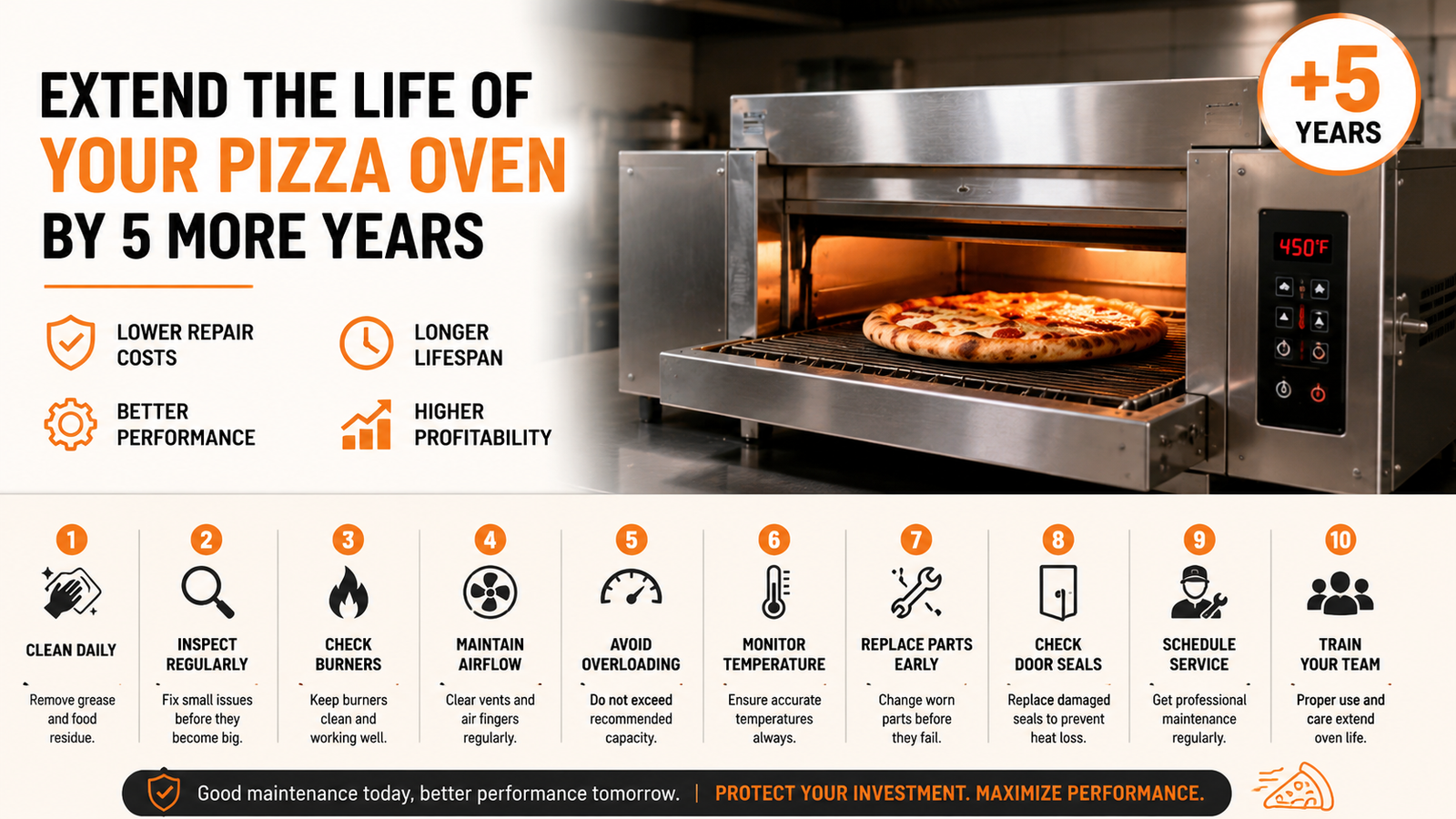
Daily Maintenance Tips
Daily cleaning helps prevent heating problems.
Clean Interior Surfaces
Remove food residue and grease.
Inspect Air Fingers
Look for visible blockages.
Check Conveyor Belt
Ensure smooth operation.
Verify Temperatures
Monitor baking consistency.
Small daily tasks prevent larger issues.
Weekly Maintenance Tips
Weekly maintenance should include:
- Deep cleaning air fingers
- Inspecting burners
- Checking airflow systems
- Examining conveyor components
Regular inspections improve reliability.
When to Call a Professional
Some issues require professional service.
Call a technician if you notice:
Persistent Uneven Heating
Despite cleaning and adjustments.
Burner Problems
Gas system issues should always be handled by qualified technicians.
Electrical Failures
Heating element or control system problems require professional repair.
Calibration Issues
Professional tools are often needed for accurate adjustments.
The Cost of Ignoring Uneven Heating
Many operators continue working around heating problems.
This often leads to:
- Increased food waste
- Customer complaints
- Lost sales
- Higher utility costs
- Equipment damage
Addressing problems early saves money.
Benefits of Fixing Heating Issues
Better Pizza Quality
Consistent baking improves customer satisfaction.
Reduced Waste
Fewer rejected pizzas.
Faster Service
Reliable performance improves kitchen efficiency.
Lower Operating Costs
Efficient ovens consume less energy.
Longer Equipment Life
Proper maintenance reduces wear and tear.
Why Preventive Maintenance Matters
Most uneven heating problems develop gradually.
Regular maintenance helps identify issues before they affect operations.
A preventative maintenance program typically includes:
- Cleaning
- Inspection
- Calibration
- Component replacement
The result is more reliable performance.
Why Neelkanth Enterprise Recommends Regular Conveyor Oven Maintenance
At Neelkanth Enterprise, we help restaurants, pizza outlets, cafés, and cloud kitchens maximize oven performance through proper maintenance and equipment support.
Routine inspections help businesses achieve:
- Consistent pizza quality
- Reduced downtime
- Lower maintenance costs
- Improved efficiency
- Greater profitability
A well-maintained conveyor oven delivers better results every day.
Conclusion
If your conveyor oven is not heating evenly, don’t ignore the problem.
Uneven heating affects pizza quality, customer satisfaction, food costs, and profitability. Fortunately, most causes—including dirty air fingers, blocked airflow, faulty burners, sensor issues, and poor maintenance—can be corrected quickly.
By following proper cleaning procedures, monitoring performance, and scheduling regular maintenance, you can restore consistent baking and keep your operation running smoothly.
A conveyor oven should deliver the same result every time. When it does, your customers notice the difference.
FAQs
Why is my conveyor oven cooking one side faster than the other?
This is often caused by blocked air fingers, airflow issues, or heating component problems.
Can dirty air fingers cause uneven heating?
Yes. Dirty air fingers are one of the most common causes of uneven heat distribution.
How often should conveyor ovens be cleaned?
Basic cleaning should be performed daily, with deeper inspections and maintenance scheduled regularly.
Do temperature sensors affect heating consistency?
Absolutely. Faulty or miscalibrated sensors can create inaccurate temperature control.
Can uneven heating increase food costs?
Yes. Poorly cooked pizzas lead to waste, customer complaints, and reduced profitability.