Opening or running a successful pizza restaurant requires more than a great menu and skilled staff. Behind every profitable pizza business is an efficient kitchen setup, and the pizza oven sits at the center of that operation.
Unfortunately, many restaurant owners in India make costly mistakes when selecting, operating, or maintaining their pizza ovens. These mistakes often lead to slower service, inconsistent product quality, higher operating costs, poor customer reviews, and lost revenue.
The surprising part is that most of these mistakes are completely avoidable.
Whether you own a pizza restaurant, cloud kitchen, café, QSR, or food court outlet, understanding these common pizza oven mistakes can save you thousands of rupees every year and help your business grow faster.
Let’s look at the five biggest pizza oven mistakes Indian restaurant owners continue to make.
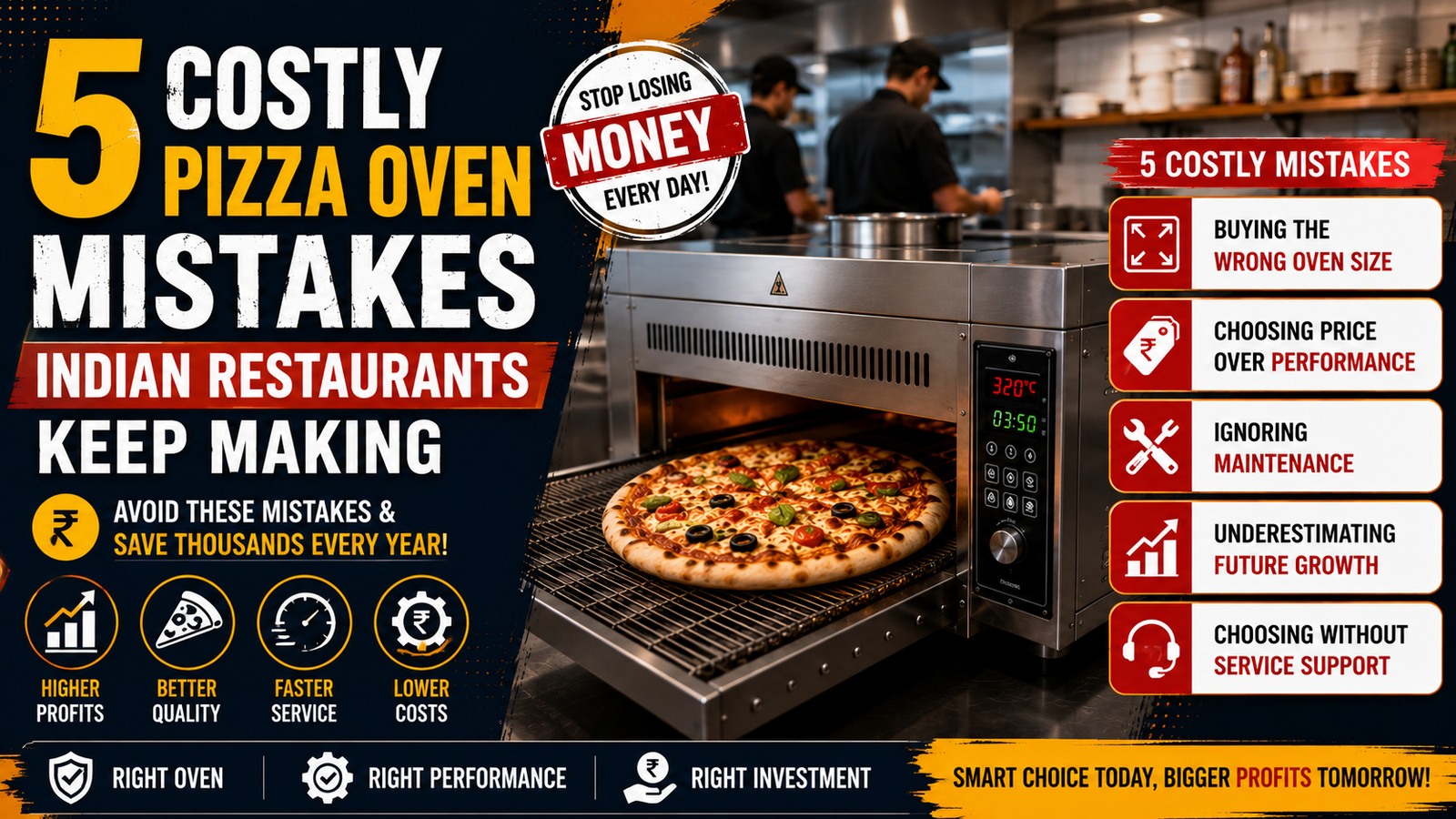
Mistake #1: Buying the Wrong Oven Size
This is by far the most common mistake.
Many restaurant owners either:
- Buy an oven that is too small
- Buy an oven that is unnecessarily large
Both decisions can create operational problems.
Buying Too Small
A small oven may seem affordable initially, but problems start when business grows.
Common issues include:
- Production bottlenecks
- Long waiting times
- Delayed deliveries
- Overworked staff
- Lost sales opportunities
For example, an outlet handling 150 pizzas daily may struggle significantly with an oven designed for only 50–60 pizzas.
Buying Too Large
A larger oven isn’t always better.
Problems include:
- Higher purchase costs
- Increased gas consumption
- Wasted kitchen space
- Lower efficiency during low-volume periods
The Right Approach
Always calculate:
- Daily order volume
- Peak-hour demand
- Future growth projections
- Kitchen space availability
Choosing the right size from the beginning prevents costly upgrades later.
Mistake #2: Choosing Price Over Performance
Many restaurant owners focus only on the purchase price.
While controlling costs is important, buying the cheapest oven available often creates bigger expenses later.
Common Problems with Cheap Ovens
- Uneven cooking
- Frequent breakdowns
- Poor insulation
- Higher gas usage
- Limited lifespan
- Lack of spare parts
The initial savings disappear quickly through:
- Repairs
- Downtime
- Product waste
- Customer complaints
Think Long-Term
Instead of asking:
“What is the cheapest oven?”
Ask:
“Which oven offers the best value over five years?”
A slightly higher investment today can generate substantial savings over time.
Mistake #3: Ignoring Maintenance
Many restaurant owners treat maintenance as an afterthought.
This is one of the fastest ways to reduce oven performance and increase operating costs.
Signs of Poor Maintenance
- Uneven baking
- Longer cooking times
- Higher gas consumption
- Temperature fluctuations
- Conveyor belt issues
Essential Maintenance Tasks
Regular cleaning of:
- Burners
- Conveyor belts
- Air vents
- Internal chambers
- Temperature sensors
Scheduled inspections help identify problems before they become expensive repairs.
Why Maintenance Matters
A well-maintained oven:
- Lasts longer
- Uses less energy
- Produces better pizzas
- Reduces downtime
Ignoring maintenance often leads to emergency repair bills and business disruptions.
Mistake #4: Underestimating Future Growth
Many restaurant owners purchase equipment based only on current requirements.
This short-term thinking can become very expensive.
Imagine opening a pizza outlet that handles:
- 40 orders per day
Within two years:
- Delivery orders increase
- Brand awareness grows
- Corporate orders arrive
- Customer demand doubles
Suddenly the original oven becomes a limitation.
Common Consequences
- Production delays
- Missed opportunities
- Expensive equipment upgrades
- Kitchen redesign costs
Smart Planning
When selecting an oven, consider:
- Where your business will be in three years
- Expansion plans
- Online delivery growth
- Additional menu items
Planning ahead protects your investment.
Mistake #5: Choosing an Oven Without Considering Service Support
This mistake is often overlooked during the buying process.
Restaurant owners focus on:
- Price
- Features
- Capacity
But forget one critical factor:
After-sales support.
What Happens When Problems Occur?
Even high-quality ovens occasionally require:
- Maintenance
- Spare parts
- Technical support
- Calibration
If support is unavailable, downtime becomes expensive.
Questions Every Buyer Should Ask
- Are spare parts available locally?
- How quickly can technicians respond?
- Does the supplier provide installation support?
- What warranty is included?
- Is technical assistance available when needed?
Why Service Matters
Every day your oven is not working:
- Sales are lost
- Customers are disappointed
- Deliveries are delayed
- Revenue suffers
Reliable service support is often more valuable than minor price differences.
Additional Mistakes Restaurant Owners Make
Poor Kitchen Layout Planning
Many businesses purchase an oven before designing workflow.
This creates:
- Staff congestion
- Reduced efficiency
- Operational delays
Inadequate Ventilation
Proper ventilation affects:
- Safety
- Equipment performance
- Kitchen comfort
Ignoring Energy Costs
An inefficient oven can significantly increase monthly utility bills.
Always compare:
- Gas consumption
- Energy efficiency
- Operating costs
before making a decision.
How the Right Oven Impacts Business Growth
A properly selected pizza oven helps improve:
Production Speed
More orders completed in less time.
Product Consistency
Customers receive the same quality every visit.
Customer Satisfaction
Better experiences lead to repeat business.
Staff Productivity
Simplified operations improve efficiency.
Profitability
Lower waste and higher production increase revenue potential.
How Successful Pizza Brands Avoid These Mistakes
Growing pizza brands focus on:
- Long-term planning
- Quality equipment
- Reliable suppliers
- Preventive maintenance
- Scalability
They understand that kitchen equipment is an investment, not just an expense.
Choosing the Right Pizza Oven for Your Restaurant
Before purchasing a pizza oven, evaluate:
Business Requirements
- Current order volume
- Future growth expectations
Kitchen Space
- Available floor area
- Workflow requirements
Budget
- Purchase cost
- Operating cost
- Maintenance cost
Support Availability
- Service network
- Spare parts availability
Production Goals
- Daily output requirements
- Peak-hour capacity
Making a well-informed decision reduces risk and maximizes return on investment.
Why Neelkanth Enterprise Helps Restaurants Avoid These Mistakes
At Neelkanth Enterprise, we help restaurant owners select the right pizza oven based on:
- Business size
- Production needs
- Kitchen layout
- Budget planning
- Future expansion goals
Our objective is not simply to sell equipment but to help businesses invest in solutions that support long-term growth and profitability.
Conclusion
Pizza ovens are among the most important investments any pizza restaurant will make. Unfortunately, many Indian restaurant owners continue to make costly mistakes that affect productivity, profitability, and customer satisfaction.
Choosing the wrong size, focusing only on price, ignoring maintenance, underestimating growth, and overlooking service support can cost businesses thousands of rupees every year.
By understanding these mistakes and making smarter equipment decisions, restaurant owners can improve efficiency, reduce operating costs, and position their businesses for long-term success.
The right pizza oven isn’t simply a piece of equipment—it’s a growth tool that directly impacts your restaurant’s future.
FAQs
What is the biggest pizza oven mistake restaurant owners make?
Choosing the wrong oven size is one of the most common and costly mistakes.
Does a cheaper pizza oven save money?
Not always. Cheap ovens often result in higher maintenance, energy costs, and operational issues.
How often should a commercial pizza oven be maintained?
Regular cleaning should be performed daily, with professional inspections scheduled periodically.
Why is service support important when buying a pizza oven?
Fast support reduces downtime and helps avoid revenue loss when technical issues occur.
How can I choose the right pizza oven for my restaurant?
Evaluate production volume, kitchen space, future growth plans, operating costs, and after-sales support before making a purchase.