Buying a commercial pizza oven is one of the biggest investments for any pizza restaurant, cloud kitchen, café, food court, or QSR business. The right oven can improve production speed, consistency, customer satisfaction, and profitability. The wrong oven can lead to higher operating costs, maintenance problems, slower service, and lost revenue.
Many restaurant owners focus only on price and overlook several important factors before making a purchase. This often results in expensive mistakes that could have been avoided with proper planning.
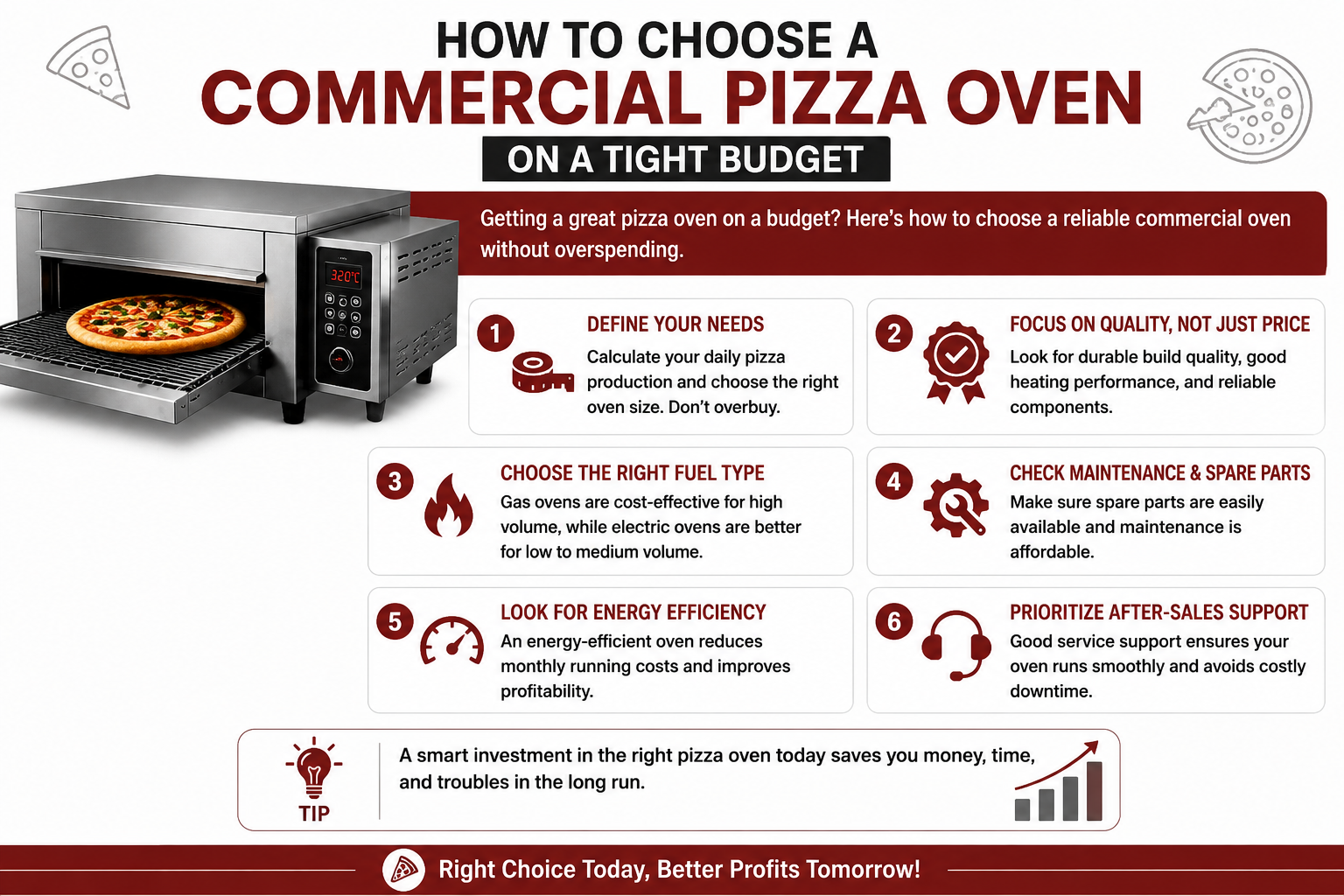
Before you invest your money, use this practical checklist to ensure you’re selecting the right commercial pizza oven for your business.
Why a Buying Checklist Matters
A pizza oven is not just another kitchen appliance.
It directly affects:
- Food quality
- Production capacity
- Customer experience
- Staff efficiency
- Operating costs
- Business growth
Spending a little extra time evaluating your options can save significant money in the long run.
1. Verify Your Daily Production Requirement
The first question you should answer is:
How many pizzas will you sell per day?
Your production volume determines the oven size you need.
Small Operations
- 20–50 pizzas daily
Medium Operations
- 50–150 pizzas daily
Large Operations
- 150+ pizzas daily
Choosing an oven without understanding your production requirement is one of the most common mistakes buyers make.
2. Check Available Kitchen Space
Many buyers purchase an oven before measuring their kitchen.
Always verify:
- Floor space
- Ventilation area
- Staff movement space
- Utility connections
An oversized oven can create workflow problems and reduce efficiency.
Measure carefully before making a final decision.
3. Choose the Right Oven Type
Different businesses require different oven types.
Deck Ovens
Best for:
- Cafés
- Small restaurants
- Artisan pizza operations
Conveyor Ovens
Best for:
- High-volume restaurants
- Cloud kitchens
- QSR businesses
Electric Ovens
Best for:
- Small operations
- Areas without gas access
Gas Ovens
Best for:
- High production
- Lower operating costs
Select the oven type that matches your business model.
4. Verify Build Quality
Build quality directly impacts durability and reliability.
Look for:
- Stainless steel construction
- Strong insulation
- Durable components
- Quality heating systems
A well-built oven typically lasts longer and requires fewer repairs.
Avoid choosing solely based on price.
5. Check Fuel Consumption
Operating costs matter.
Ask suppliers about:
- Gas consumption
- Electricity usage
- Monthly operating expenses
An energy-efficient oven can save thousands of rupees annually.
Many buyers focus on purchase price while ignoring long-term running costs.
6. Evaluate Production Capacity
Ask the supplier:
- How many pizzas per hour can the oven produce?
- Can it handle peak-hour demand?
- Is there room for future growth?
Your oven should comfortably support both current and future requirements.
Never buy based only on today’s demand.
7. Confirm Spare Parts Availability
Every commercial oven eventually requires maintenance.
Ask:
- Are spare parts available locally?
- How quickly can replacements be supplied?
- Are parts affordable?
Downtime can be extremely expensive for food businesses.
Easy spare part availability is a major advantage.
8. Verify After-Sales Support
Many buyers overlook this important factor.
Ask:
- Is installation included?
- Is technical training provided?
- What support is available after purchase?
- How quickly can service technicians respond?
Reliable support reduces stress and minimizes business interruptions.
9. Review Warranty Coverage
A warranty provides protection against manufacturing defects.
Before purchasing, verify:
- Warranty duration
- Components covered
- Service process
- Warranty limitations
Always request warranty details in writing.
A strong warranty demonstrates supplier confidence in the product.
10. Compare Total Cost of Ownership
The cheapest oven is not always the best value.
Consider:
Initial Investment
Purchase price
Operating Costs
Gas or electricity expenses
Maintenance Costs
Repairs and servicing
Downtime Risk
Potential business interruptions
Future Scalability
Ability to support growth
The best oven is the one that delivers maximum value over its entire lifespan.
Bonus Tip: Plan for Growth
Many restaurant owners buy equipment based only on current demand.
A smarter approach is to consider:
- Future expansion
- Online delivery growth
- Additional menu items
- New locations
Investing slightly ahead of current requirements can prevent expensive upgrades later.
Common Buying Mistakes to Avoid
Buying Based Only on Price
Low-cost ovens often result in higher long-term expenses.
Ignoring Service Support
Poor support can lead to significant downtime.
Choosing the Wrong Size
An undersized oven limits growth.
Not Comparing Suppliers
Always compare features, service, and value.
Ignoring Operating Costs
Monthly expenses can quickly exceed initial savings.
Questions to Ask Every Supplier
Before making a final decision, ask:
- What is the hourly production capacity?
- What are the operating costs?
- Is installation included?
- What warranty is provided?
- Are spare parts readily available?
- What maintenance is required?
- How quickly can service be provided?
The answers will help you compare options effectively.
Which Oven Is Best for Most Indian Restaurants?
The answer depends on:
- Production volume
- Budget
- Kitchen space
- Growth plans
For many growing restaurants and cloud kitchens, conveyor gas ovens offer:
- Faster production
- Consistent quality
- Lower operating costs
- Better scalability
However, smaller cafés may find deck ovens or compact electric models more suitable.
Why Neelkanth Enterprise Helps Buyers Make Better Decisions
At Neelkanth Enterprise, we assist restaurants, cafés, and cloud kitchens in selecting commercial pizza ovens based on:
- Production requirements
- Budget
- Kitchen layout
- Future growth plans
- Long-term operating costs
Our goal is to help customers invest in equipment that supports profitability and business growth.
Conclusion
Purchasing a commercial pizza oven is a major decision that affects every aspect of your food business.
By following this 10-point checklist, you can avoid costly mistakes and choose equipment that delivers strong performance, reliability, and value.
Remember that the best oven is not necessarily the cheapest or the most expensive. It is the oven that fits your production needs, budget, and growth plans while providing dependable service for years to come.
Take the time to evaluate your options carefully, ask the right questions, and make an informed investment.
FAQs
What should I check before buying a pizza oven?
You should verify production capacity, kitchen space, fuel consumption, build quality, service support, spare parts availability, and warranty coverage.
Is a gas or electric pizza oven better?
Gas ovens generally offer lower operating costs, while electric ovens provide easier installation.
How important is after-sales support?
Very important. Reliable support reduces downtime and helps maintain smooth operations.
Should I buy a larger oven for future growth?
Yes, but only if the additional capacity aligns with realistic expansion plans.
What is the biggest mistake buyers make?
Choosing an oven based only on price instead of evaluating total ownership costs and long-term value.