Many café owners spend thousands of rupees sourcing premium coffee beans, training baristas, and creating the perfect coffee menu. Yet despite all that effort, customers may still complain that the coffee tastes bitter, flat, sour, or inconsistent.
The surprising truth is that the problem may not be your beans, your recipe, or even your staff.
It could be your coffee machine.
A poorly maintained coffee machine can slowly destroy coffee quality over time. Coffee oils, mineral deposits, milk residue, and worn components can significantly affect flavour, aroma, temperature, and consistency.
Many café owners don’t notice the decline because it happens gradually. However, customers often do.
In this guide, we’ll explain how coffee machines affect coffee quality, the warning signs to watch for, and the maintenance steps that actually make a difference.
Why Coffee Quality Depends on Your Machine
A coffee machine does much more than heat water.
It controls:
- Water temperature
- Brewing pressure
- Extraction consistency
- Milk steaming performance
- Brewing speed
Even premium beans cannot compensate for a machine that isn’t functioning correctly.
When machine performance declines, coffee quality declines as well.
The Hidden Problem Most Café Owners Ignore
Many café owners focus on:
- Coffee beans
- Milk quality
- Recipes
- Barista training
But they overlook machine maintenance.
Over time, machines accumulate:
- Coffee oils
- Mineral scale
- Milk deposits
- Blocked filters
- Worn seals
These issues directly impact flavour and consistency.
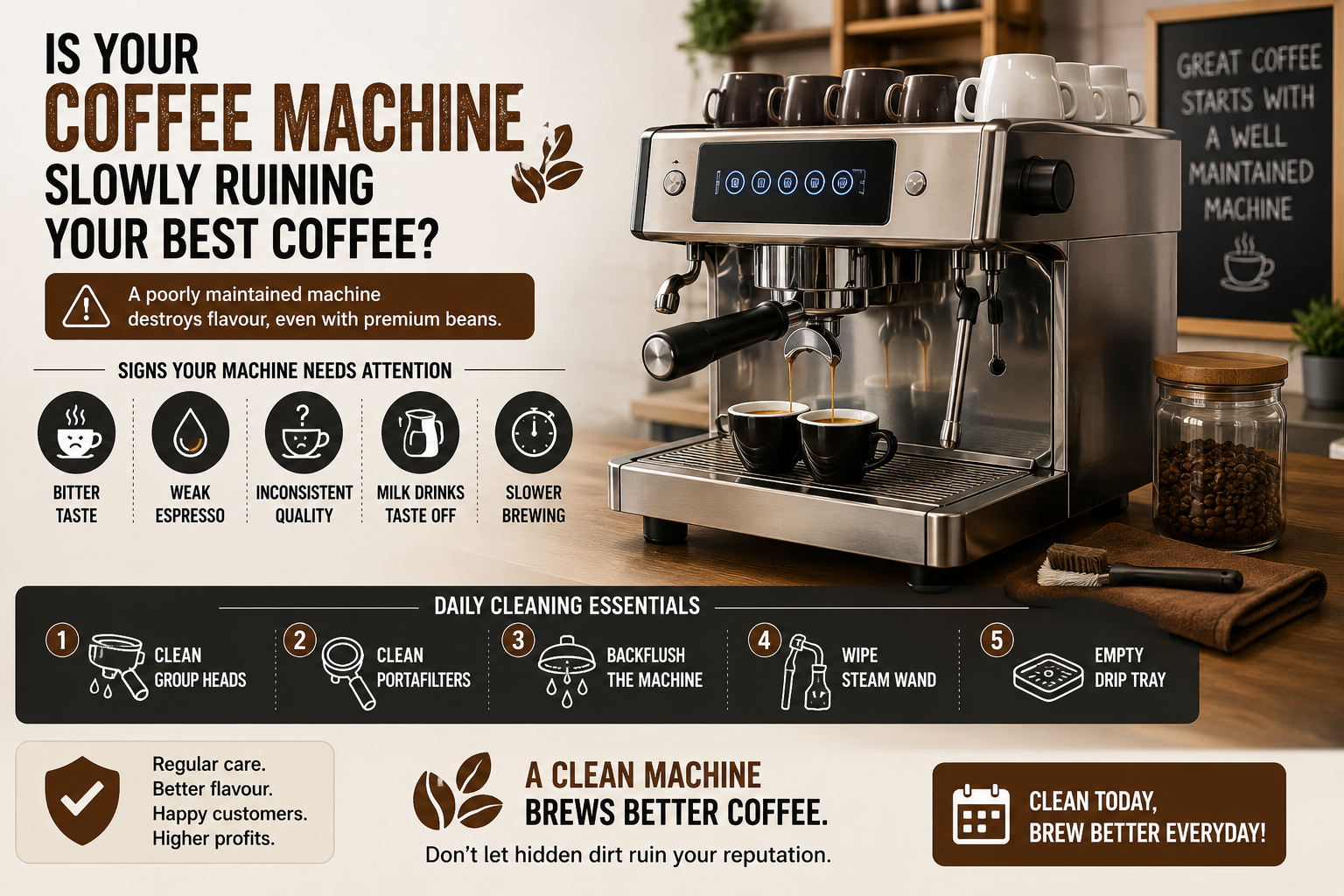
Sign #1: Your Coffee Tastes Bitter
Bitterness is one of the most common symptoms of poor machine maintenance.
Possible causes include:
- Dirty group heads
- Old coffee residue
- Blocked screens
- Inconsistent water flow
Coffee oils left inside the machine eventually become rancid and affect every cup produced.
Solution
Regular cleaning of:
- Group heads
- Portafilters
- Shower screens
- Brewing components
helps restore flavour quality.
Sign #2: Your Espresso Tastes Weak
If espresso suddenly lacks body and flavour, the machine may not be extracting correctly.
Possible causes:
- Low brewing pressure
- Blocked filters
- Worn components
- Scale buildup
Poor extraction results in weak and disappointing coffee.
Solution
Schedule regular inspections and pressure testing to ensure proper extraction performance.
Sign #3: Inconsistent Coffee Quality
One customer receives excellent coffee while another receives a poor cup.
This inconsistency often indicates machine problems.
Common causes include:
- Uneven water distribution
- Temperature fluctuations
- Dirty brewing components
- Maintenance neglect
Consistency is essential for customer trust.
A customer should receive the same quality every visit.
Sign #4: Milk-Based Drinks Taste Different
Cappuccinos, lattes, and flat whites rely heavily on proper milk steaming.
Problems occur when:
- Steam wands are not cleaned properly
- Milk residue accumulates
- Steam pressure becomes inconsistent
This affects:
- Milk texture
- Sweetness
- Foam quality
Solution
Steam wands should be cleaned immediately after every use.
Sign #5: Coffee Takes Longer to Brew
Longer brewing times often indicate internal problems.
Possible causes include:
- Scale buildup
- Water flow restrictions
- Blocked filters
- Pump issues
Slow brewing not only affects flavour but also reduces service efficiency.
How Mineral Scale Damages Coffee Quality
Water quality plays a major role in coffee production.
Over time, minerals accumulate inside:
- Boilers
- Pipes
- Valves
- Heating systems
This buildup is called scale.
Scale causes:
- Temperature instability
- Reduced pressure
- Slower performance
- Poor extraction
Many cafés experience declining coffee quality simply because machines require descaling.
The Impact of Dirty Group Heads
Group heads are among the most important parts of an espresso machine.
When neglected, they collect:
- Coffee oils
- Fine coffee particles
- Brewing residue
This contamination affects every espresso shot.
Customers may notice:
- Burnt flavours
- Bitter notes
- Unpleasant aftertaste
Daily cleaning is essential.
Why Premium Beans Can’t Fix Machine Problems
Many café owners respond to declining quality by purchasing better beans.
Unfortunately, even premium beans cannot compensate for:
- Incorrect temperature
- Poor pressure
- Dirty equipment
- Scale buildup
A poorly maintained machine can ruin even the most expensive coffee.
Before changing beans, inspect your equipment.
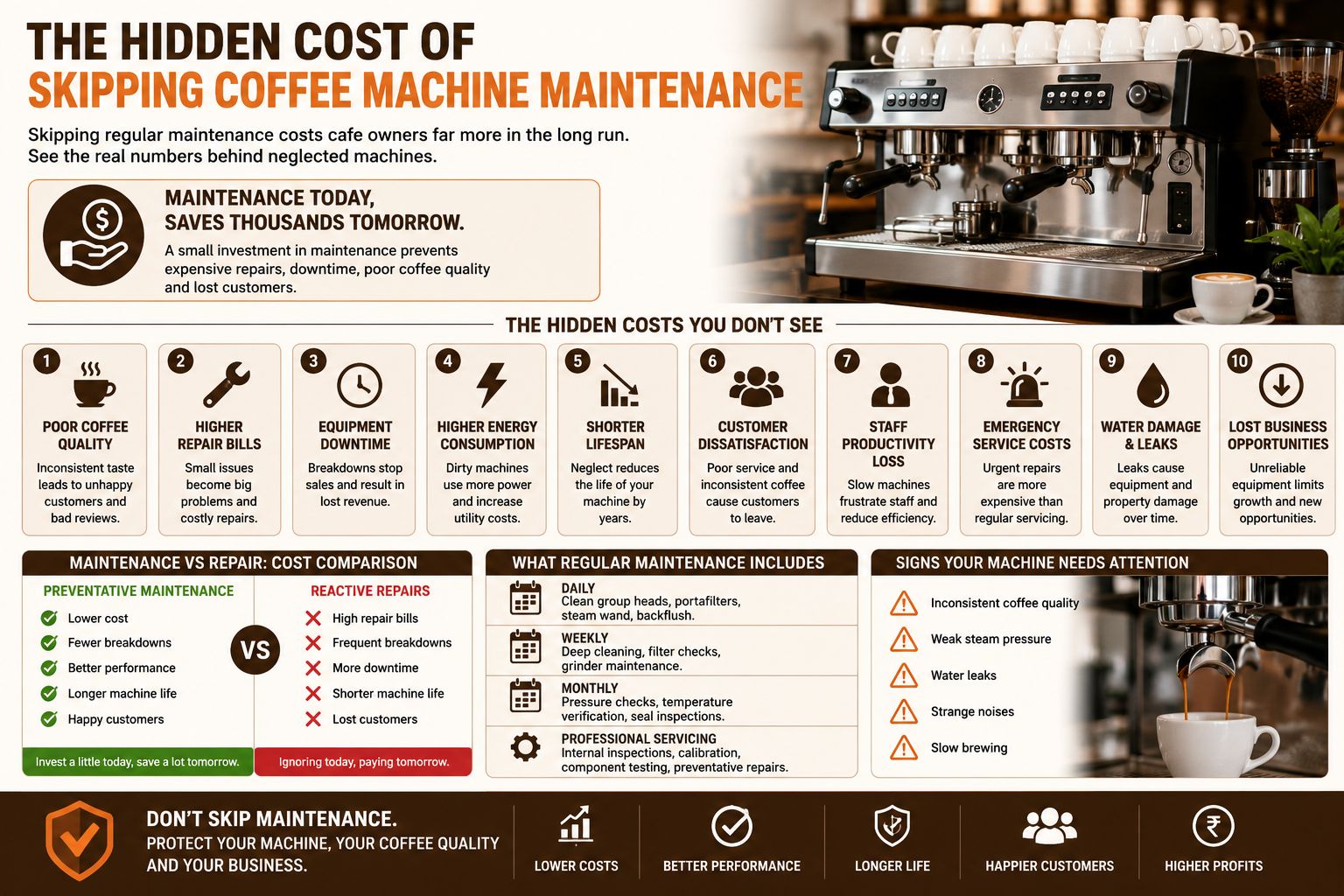
Daily Cleaning Tasks Every Café Should Perform
Clean Group Heads
Remove coffee residue daily.
Backflush the Machine
Use appropriate cleaning solutions.
Clean Portafilters
Prevent oil buildup.
Wipe Steam Wands
Clean after every use.
Empty Drip Trays
Maintain hygiene and efficiency.
These simple tasks prevent major problems later.
Weekly Maintenance Tasks
Weekly maintenance should include:
- Deep cleaning group heads
- Soaking portafilters
- Inspecting seals
- Checking water flow
- Cleaning grinders
Preventive maintenance improves machine lifespan and coffee quality.
Monthly Maintenance Tasks
At least once per month:
- Check pressure levels
- Inspect steam performance
- Examine water filtration systems
- Review machine calibration
Small adjustments often restore performance before problems become serious.
The Importance of Water Filtration
Poor water quality affects both coffee taste and machine health.
A proper filtration system helps:
- Improve flavour
- Reduce scale buildup
- Extend equipment life
- Improve consistency
Many coffee quality issues originate from water problems rather than coffee beans.
When Professional Servicing Is Needed
Even with daily cleaning, professional servicing remains important.
Signs your machine needs attention include:
- Pressure fluctuations
- Temperature instability
- Steam issues
- Leaks
- Unusual noises
Regular servicing prevents expensive breakdowns.
How Poor Maintenance Costs Money
Many owners view maintenance as an expense.
In reality, neglect is often more expensive.
Poor maintenance can cause:
- Lost customers
- Negative reviews
- Equipment damage
- Expensive repairs
- Reduced productivity
Preventive maintenance is almost always cheaper than emergency repairs.
Benefits of a Well-Maintained Coffee Machine
A properly maintained machine delivers:
Better Coffee Quality
Cleaner flavours and better extraction.
Faster Service
Improved workflow and productivity.
Greater Consistency
Reliable results every day.
Lower Repair Costs
Fewer breakdowns and emergencies.
Longer Equipment Life
Maximum return on investment.
Why Successful Cafés Prioritize Maintenance
Leading cafés understand that coffee quality begins with equipment.
They invest in:
- Daily cleaning routines
- Staff training
- Preventive maintenance
- Professional servicing
These habits help maintain consistent quality and customer satisfaction.
Why Neelkanth Enterprise Supports Café Equipment Performance
At Neelkanth Enterprise, we understand that café success depends on reliable equipment.
We help businesses select and maintain commercial food service equipment that supports:
- Consistent quality
- Operational efficiency
- Lower maintenance costs
- Long-term profitability
The right equipment and maintenance strategy can significantly improve business performance.
Conclusion
If your coffee quality has slowly declined despite using quality beans and skilled staff, your coffee machine may be the hidden problem.
Coffee oils, scale buildup, blocked components, and poor maintenance practices can gradually ruin flavour, consistency, and customer satisfaction.
The good news is that most of these problems are preventable.
With proper cleaning, routine maintenance, water filtration, and professional servicing, your coffee machine can continue producing excellent coffee for years to come.
Sometimes the difference between an average cup and an exceptional one isn’t the bean—it’s the machine behind it.
FAQs
Can a dirty coffee machine affect coffee taste?
Yes. Coffee oils and residue can create bitter, stale, and unpleasant flavours.
How often should a coffee machine be cleaned?
Basic cleaning should be performed daily, with deeper maintenance scheduled weekly and monthly.
What is scale buildup?
Scale is a mineral deposit that accumulates inside coffee machines and affects temperature, pressure, and performance.
Can premium coffee beans overcome machine problems?
No. Even high-quality beans cannot compensate for poor machine maintenance.
How do I know if my coffee machine needs servicing?
Signs include inconsistent coffee quality, slow brewing, pressure fluctuations, temperature problems, and unusual machine noises.