A commercial coffee machine is the heart of any café, coffee shop, bakery, restaurant, or hotel. Customers expect every cup of coffee to be consistent, flavorful, and served quickly. However, like any heavily used equipment, coffee machines develop problems over time.
The biggest mistake many café owners make is ignoring early warning signs.
Most major coffee machine failures don’t happen overnight. The machine usually gives clear signals before a breakdown occurs. If these warning signs are identified early, owners can often avoid expensive repairs, unexpected downtime, and customer complaints.
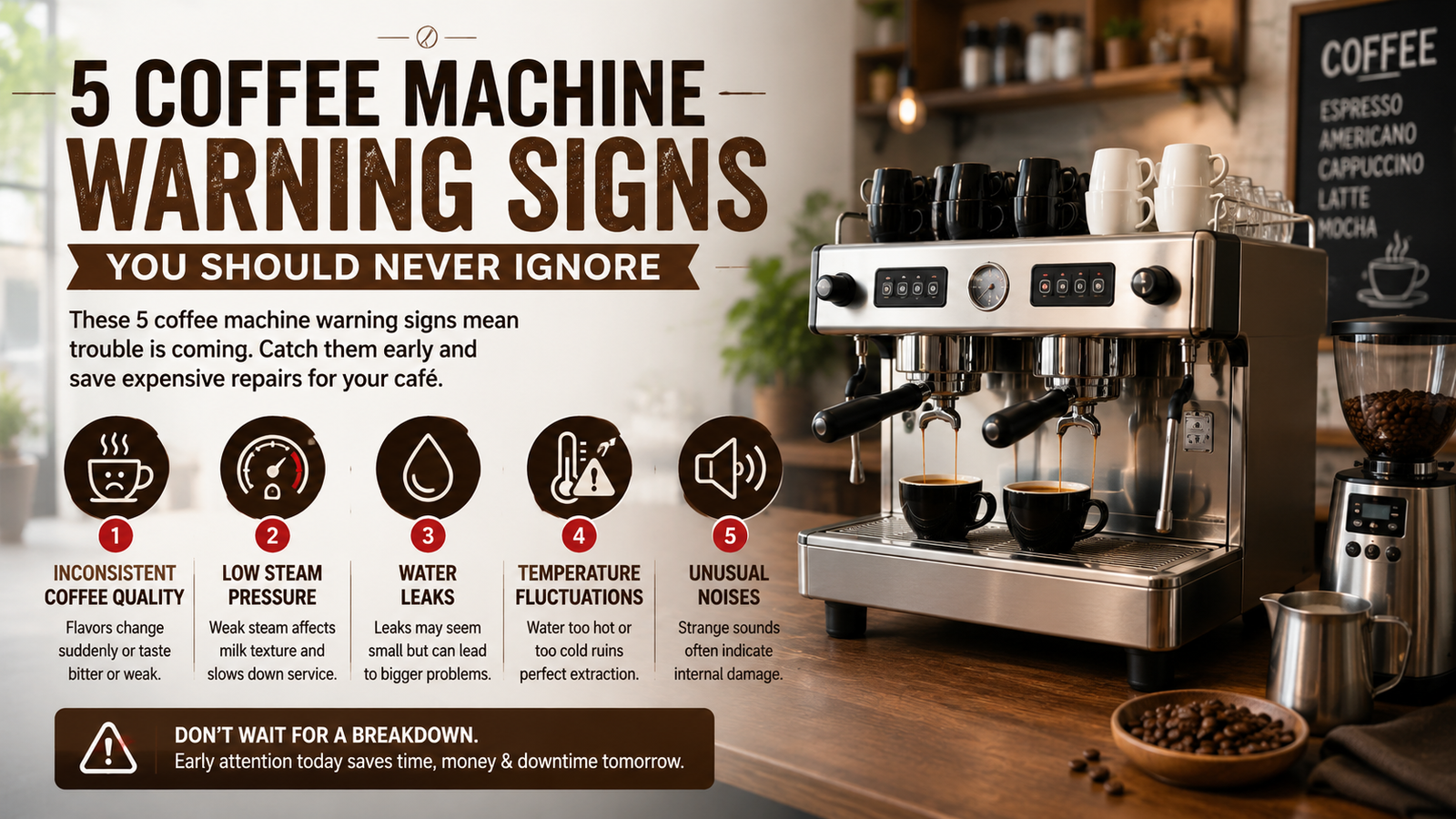
In this guide, we’ll explore five coffee machine warning signs you should never ignore and explain what they mean for your business.
Why Early Detection Matters
A small problem today can become a major repair tomorrow.
Ignoring warning signs can lead to:
- Poor coffee quality
- Slower service
- Increased repair costs
- Customer dissatisfaction
- Equipment downtime
- Lost revenue
The earlier problems are identified, the easier and less expensive they are to fix.
Warning Sign #1: Inconsistent Coffee Quality
One of the most common signs of machine trouble is inconsistent coffee quality.
You may notice:
- Coffee tastes different every day
- Espresso shots vary significantly
- Customers complain about flavor changes
- Coffee tastes weak or bitter unexpectedly
Possible Causes
- Dirty group heads
- Worn gaskets
- Pressure issues
- Scale buildup
- Temperature instability
Why It Matters
Consistency is critical in the coffee business.
Customers return because they expect the same quality every visit. If your coffee quality becomes unpredictable, customer trust begins to decline.
What To Do
- Clean brewing components thoroughly
- Check water filtration systems
- Schedule equipment inspection
- Verify pressure and temperature settings
Warning Sign #2: Low Steam Pressure
Steam pressure plays a major role in preparing milk-based drinks.
If you notice:
- Longer steaming times
- Poor milk texture
- Weak steam output
- Difficulty creating microfoam
your machine may require attention.
Possible Causes
- Scale buildup
- Boiler issues
- Steam wand blockage
- Internal component wear
Why It Matters
Milk quality directly affects:
- Cappuccinos
- Lattes
- Flat whites
- Mochas
Weak steam pressure slows service and reduces drink quality.
What To Do
- Clean steam wands regularly
- Inspect boiler performance
- Schedule preventative maintenance
Warning Sign #3: Water Leaks
Many owners ignore small leaks because the machine continues working.
This is a mistake.
Even minor leaks can indicate serious internal problems.
Common Leak Sources
- Worn seals
- Damaged gaskets
- Loose fittings
- Valve issues
- Internal cracks
Why It Matters
Leaks can cause:
- Water damage
- Electrical risks
- Internal corrosion
- Equipment failure
Small leaks often become larger and more expensive if ignored.
What To Do
Never ignore visible water leaks.
Have the machine inspected as soon as possible.
Warning Sign #4: Temperature Fluctuations
Temperature is one of the most important factors in coffee extraction.
When temperatures become unstable, coffee quality suffers immediately.
Common Symptoms
- Coffee tastes sour
- Coffee tastes burnt
- Extraction times vary
- Inconsistent drink quality
Possible Causes
- Faulty thermostats
- Heating element problems
- Scale buildup
- Boiler issues
Why It Matters
Even small temperature changes can dramatically affect flavor.
Poor temperature control often leads to:
- Under-extraction
- Over-extraction
- Inconsistent espresso
What To Do
- Monitor brewing temperatures
- Perform regular maintenance
- Check heating system performance
Warning Sign #5: Unusual Noises
Coffee machines naturally produce some operational sounds.
However, new or unusual noises often indicate trouble.
Examples include:
- Grinding sounds
- Knocking noises
- Vibrations
- Loud pump sounds
- Hissing noises
Possible Causes
- Pump problems
- Internal wear
- Loose components
- Scale buildup
- Pressure issues
Why It Matters
Ignoring unusual sounds can result in major mechanical failures.
Many expensive repairs start with a simple noise that owners overlook.
What To Do
If the machine sounds different than usual, investigate immediately.
Don’t wait until performance declines.
Additional Warning Signs to Watch For
Beyond the top five warning signs, café owners should also monitor:
Slow Brewing
Longer extraction times may indicate blockages or scale buildup.
Reduced Water Flow
Water flow problems affect coffee consistency.
Frequent Error Messages
Modern machines often provide diagnostic alerts.
Increased Energy Consumption
Unexpected utility increases can indicate efficiency problems.
Longer Recovery Times
Machines may struggle to maintain performance during busy periods.
What Causes Most Coffee Machine Problems?
Several factors contribute to equipment issues.
Poor Cleaning Practices
Coffee oils and residue accumulate over time.
Hard Water
Scale buildup damages internal components.
Delayed Maintenance
Small issues become major problems.
Heavy Usage
High-volume cafés place greater demands on equipment.
Low-Quality Water Filtration
Poor water quality accelerates wear and tear.
How Preventive Maintenance Prevents Breakdowns
Preventive maintenance remains the most effective way to avoid expensive repairs.
Benefits include:
Better Coffee Quality
Consistent extraction and flavor.
Lower Repair Costs
Minor issues are addressed before becoming major failures.
Longer Equipment Life
Proper maintenance extends machine lifespan.
Improved Efficiency
Equipment performs at optimal levels.
Better Customer Experience
Consistent coffee quality keeps customers returning.
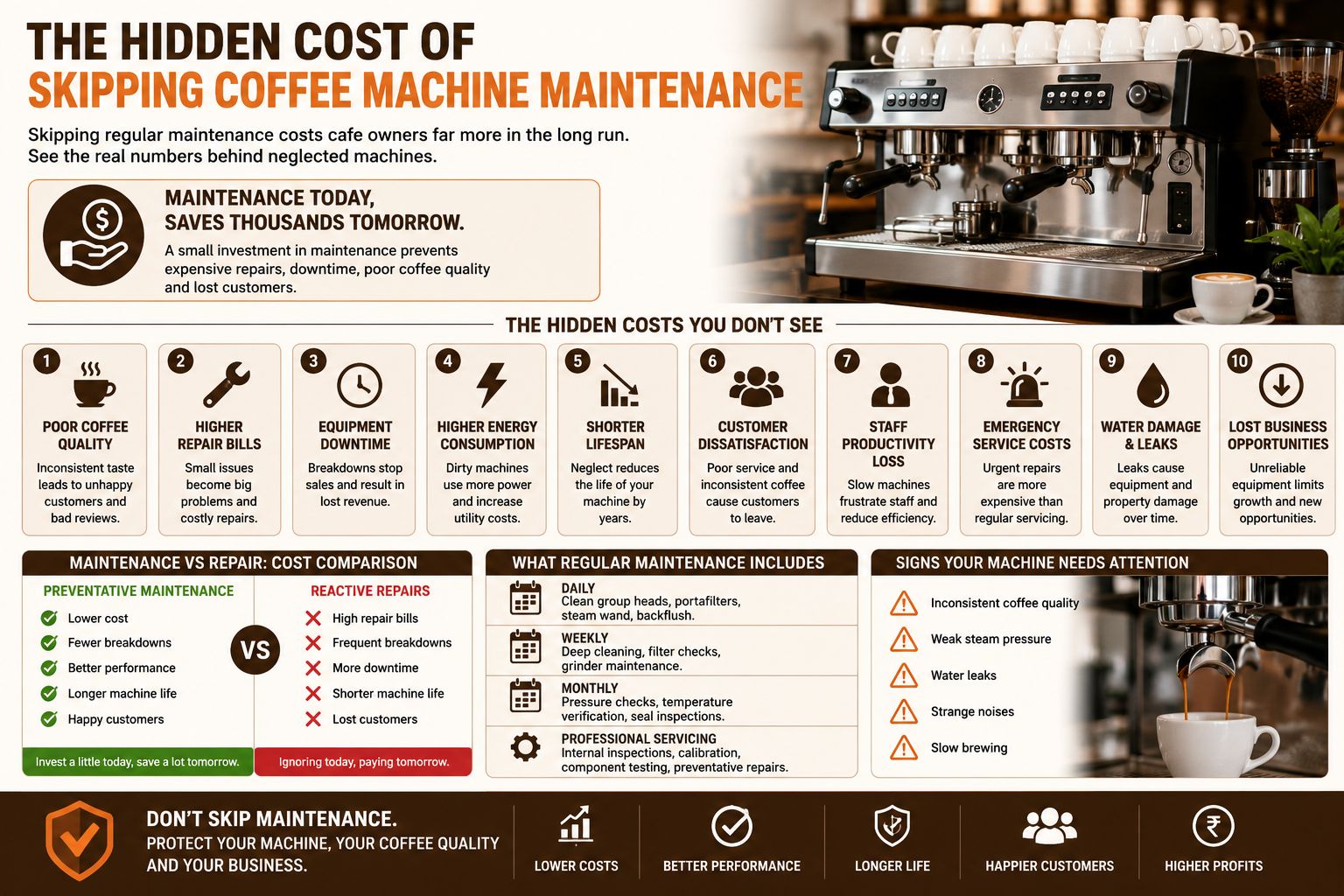
Recommended Maintenance Schedule
Daily
- Clean group heads
- Clean portafilters
- Wipe steam wands
- Backflush machine
Weekly
- Deep clean brewing components
- Check filters
Monthly
- Inspect pressure and temperature
- Examine seals and gaskets
Every 6 Months
- Professional servicing
Annually
- Full machine inspection
Following a regular maintenance schedule helps prevent most problems before they occur.
Why Successful Cafés Act Early
The most successful coffee businesses understand that equipment reliability is essential.
They monitor:
- Coffee quality
- Machine performance
- Maintenance schedules
- Service records
Rather than waiting for breakdowns, they address issues early and keep operations running smoothly.
Why Neelkanth Enterprise Recommends Preventive Equipment Care
At Neelkanth Enterprise, we work with cafés, restaurants, hotels, and food service businesses that rely on commercial equipment every day.
We recommend proactive maintenance because it helps businesses achieve:
- Better beverage quality
- Reduced downtime
- Lower repair expenses
- Improved productivity
- Greater customer satisfaction
A well-maintained coffee machine is a profitable coffee machine.
Conclusion
Most coffee machine failures don’t happen suddenly. Machines usually provide warning signs long before a serious breakdown occurs.
Inconsistent coffee quality, low steam pressure, water leaks, temperature fluctuations, and unusual noises are all signals that should never be ignored.
By identifying these problems early and following a proper maintenance schedule, café owners can avoid expensive repairs, improve coffee quality, and extend equipment lifespan.
The cost of preventative maintenance is almost always lower than the cost of emergency repairs and lost business.
Pay attention to the warning signs today, and your coffee machine will continue delivering excellent performance for years to come.
FAQs
What is the most common warning sign of coffee machine problems?
Inconsistent coffee quality is one of the earliest and most common warning signs.
Why is low steam pressure a problem?
It affects milk texture, slows service, and reduces beverage quality.
Should I worry about small water leaks?
Yes. Even small leaks can indicate larger internal issues and should be inspected immediately.
What causes temperature fluctuations in coffee machines?
Common causes include scale buildup, faulty thermostats, and heating system problems.
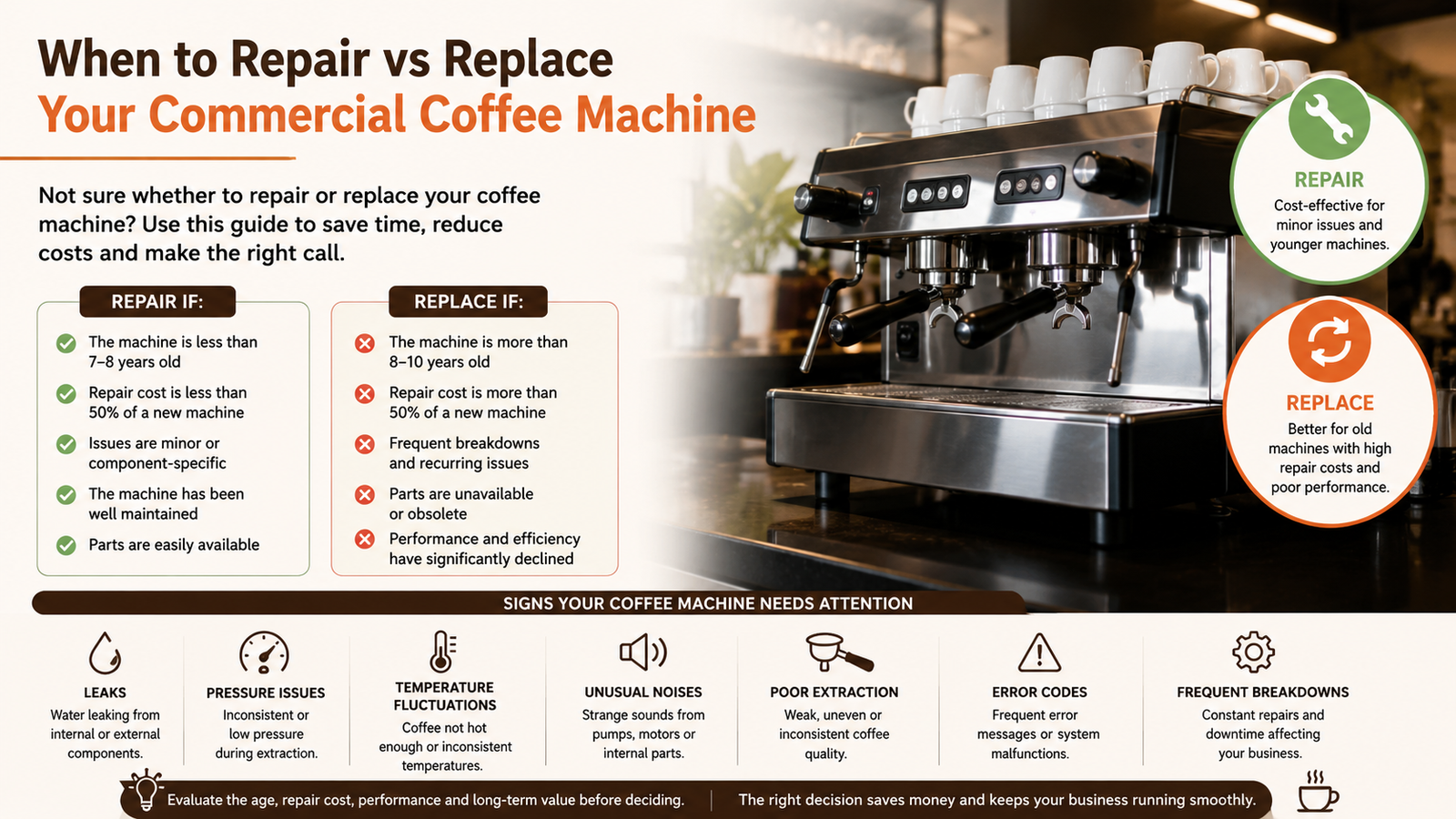
How often should a commercial coffee machine be serviced?
Most cafés should schedule professional servicing every 6 to 12 months, depending on usage levels.