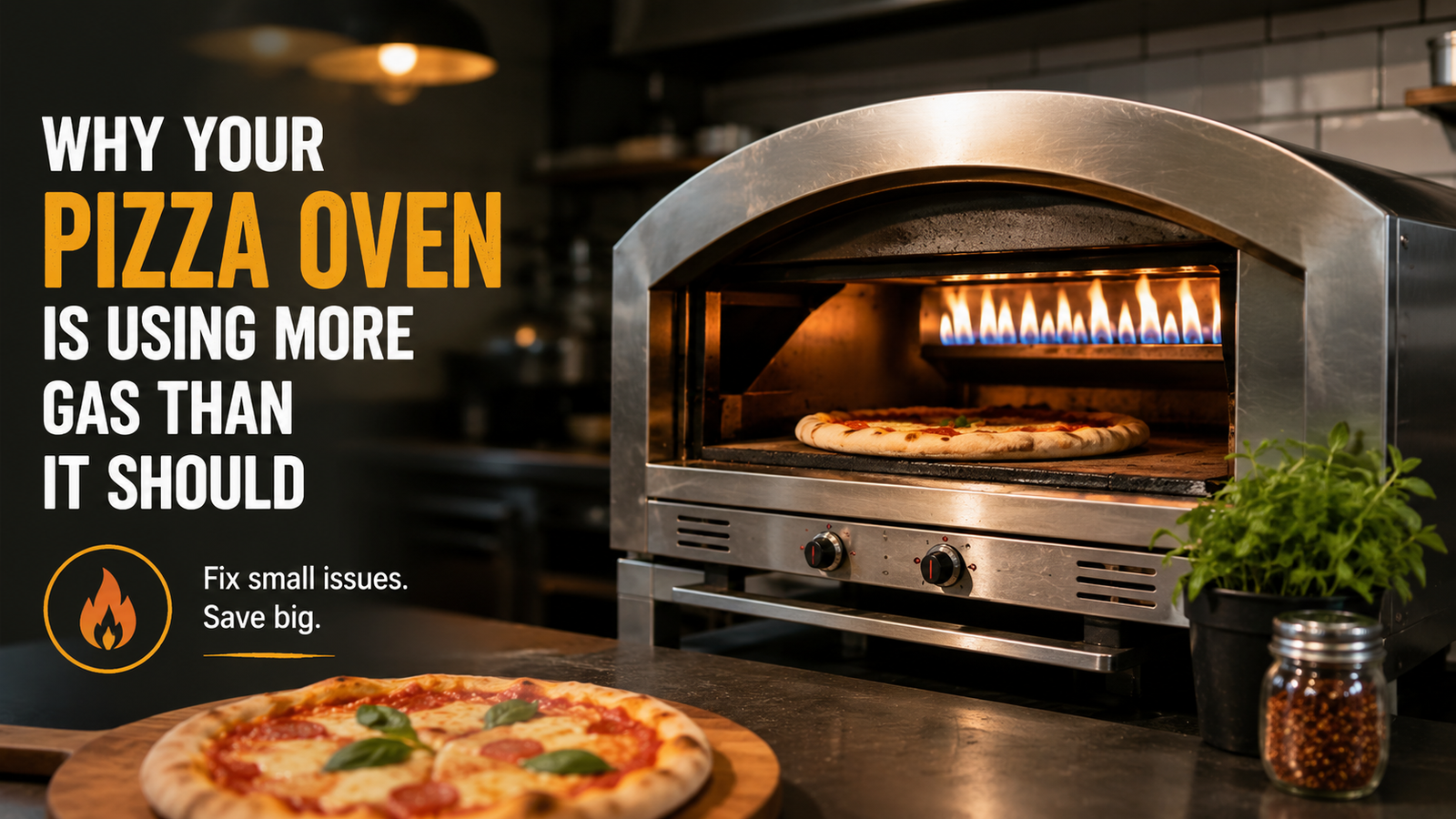
Have you noticed your restaurant’s gas bill increasing every month even though your pizza sales haven’t changed significantly?
Many restaurant owners assume rising gas costs are simply due to market prices. However, in many cases, the real problem is hidden inside the pizza oven itself.
A commercial pizza oven that consumes more gas than necessary can significantly increase operating expenses and reduce profitability. What starts as a small efficiency issue can eventually cost thousands of rupees every year.
The good news is that excessive gas consumption is usually caused by a handful of common problems that can be identified and fixed.
In this guide, we’ll explain why your pizza oven may be using too much gas and what you can do to improve efficiency, reduce costs, and protect your investment.
Why Gas Efficiency Matters
For restaurants, cafés, cloud kitchens, and pizza outlets, fuel costs are a major operational expense.
When a pizza oven operates efficiently:
- Gas bills stay lower
- Production remains consistent
- Equipment lasts longer
- Profit margins improve
When efficiency declines:
- Costs increase
- Cooking quality suffers
- Equipment wear accelerates
Understanding the causes of excessive gas usage helps maintain profitability.
Sign That Your Pizza Oven Is Using Too Much Gas
Common indicators include:
Rising Gas Bills
Consumption increases without a corresponding rise in sales.
Longer Cooking Times
Pizzas take longer to bake than before.
Uneven Cooking
Hot and cold spots develop inside the oven.
Frequent Burner Operation
The burner runs constantly to maintain temperature.
Difficulty Reaching Temperature
The oven struggles to achieve normal cooking temperatures.
If you’re experiencing one or more of these issues, your oven may need attention.
Cause #1: Dirty Burners
Dirty burners are one of the most common causes of excessive gas consumption.
Over time, burners collect:
- Grease
- Dust
- Food particles
- Carbon deposits
This restricts airflow and reduces combustion efficiency.
Result
The oven burns more gas while producing less heat.
Solution
Regular burner cleaning helps restore efficiency and improve performance.
Routine inspections can identify blockages before they become serious.
Cause #2: Poor Maintenance
Many pizza ovens operate for months without proper maintenance.
Neglected equipment often develops:
- Blocked components
- Worn parts
- Reduced efficiency
Result
The oven works harder to achieve the same cooking performance.
Solution
Implement a preventative maintenance schedule that includes:
- Cleaning
- Inspection
- Calibration
- Performance testing
Regular maintenance usually reduces gas consumption.
Cause #3: Damaged Door Seals
Door seals play an important role in heat retention.
When seals become worn or damaged:
- Heat escapes
- Temperature drops
- Burners work harder
Result
Higher gas usage and longer cooking times.
Solution
Inspect door seals regularly.
Replace damaged seals immediately to prevent energy loss.
Cause #4: Poor Insulation
Insulation helps keep heat inside the oven.
Over time, insulation materials may deteriorate.
Warning Signs
- Excessive exterior heat
- Higher gas bills
- Temperature instability
Result
The oven loses heat faster than it should.
Solution
Inspect insulation during servicing and replace damaged materials when necessary.
Cause #5: Incorrect Temperature Settings
Many operators unknowingly use temperatures higher than required.
Common Mistakes
- Excessively high baking temperatures
- Continuous operation at maximum heat
- Incorrect programming
Result
Unnecessary gas consumption.
Solution
Use temperatures appropriate for your menu and production requirements.
Small adjustments can create significant savings.
Cause #6: Gas Pressure Problems
Proper gas pressure is essential for efficient combustion.
Low Pressure
Can cause:
- Slow heating
- Longer cooking times
High Pressure
Can cause:
- Excess fuel consumption
- Poor efficiency
Solution
Have gas pressure checked by qualified technicians during maintenance visits.
Cause #7: Blocked Airflow
Pizza ovens require proper airflow for efficient combustion.
Blocked ventilation can result from:
- Grease accumulation
- Dust buildup
- Obstructed vents
Result
Incomplete combustion and wasted fuel.
Solution
Keep vents and airflow pathways clean.
Inspect ventilation systems regularly.
Cause #8: Aging Components
Older equipment often becomes less efficient.
Components that may wear over time include:
- Burners
- Ignition systems
- Valves
- Sensors
Result
Reduced performance and increased fuel consumption.
Solution
Replace worn components before they affect efficiency.
Cause #9: Frequent Door Opening
This is a common operational issue.
Every time the oven door opens:
- Heat escapes
- Temperature drops
- Burners activate more frequently
Result
Increased gas consumption.
Solution
Minimize unnecessary door openings and maintain efficient workflow.
Cause #10: Wrong Oven Size for Production
An oversized oven can waste energy.
If the oven is much larger than required:
- More heat is generated than necessary
- Fuel consumption increases
Solution
Choose equipment that matches production requirements.
Right-sizing improves efficiency and profitability.
How Much Money Can Efficient Operation Save?
While savings vary by business, improving oven efficiency can often reduce fuel consumption significantly.
Benefits include:
- Lower utility bills
- Better profit margins
- Reduced maintenance costs
- Improved equipment lifespan
Over several years, the savings can be substantial.
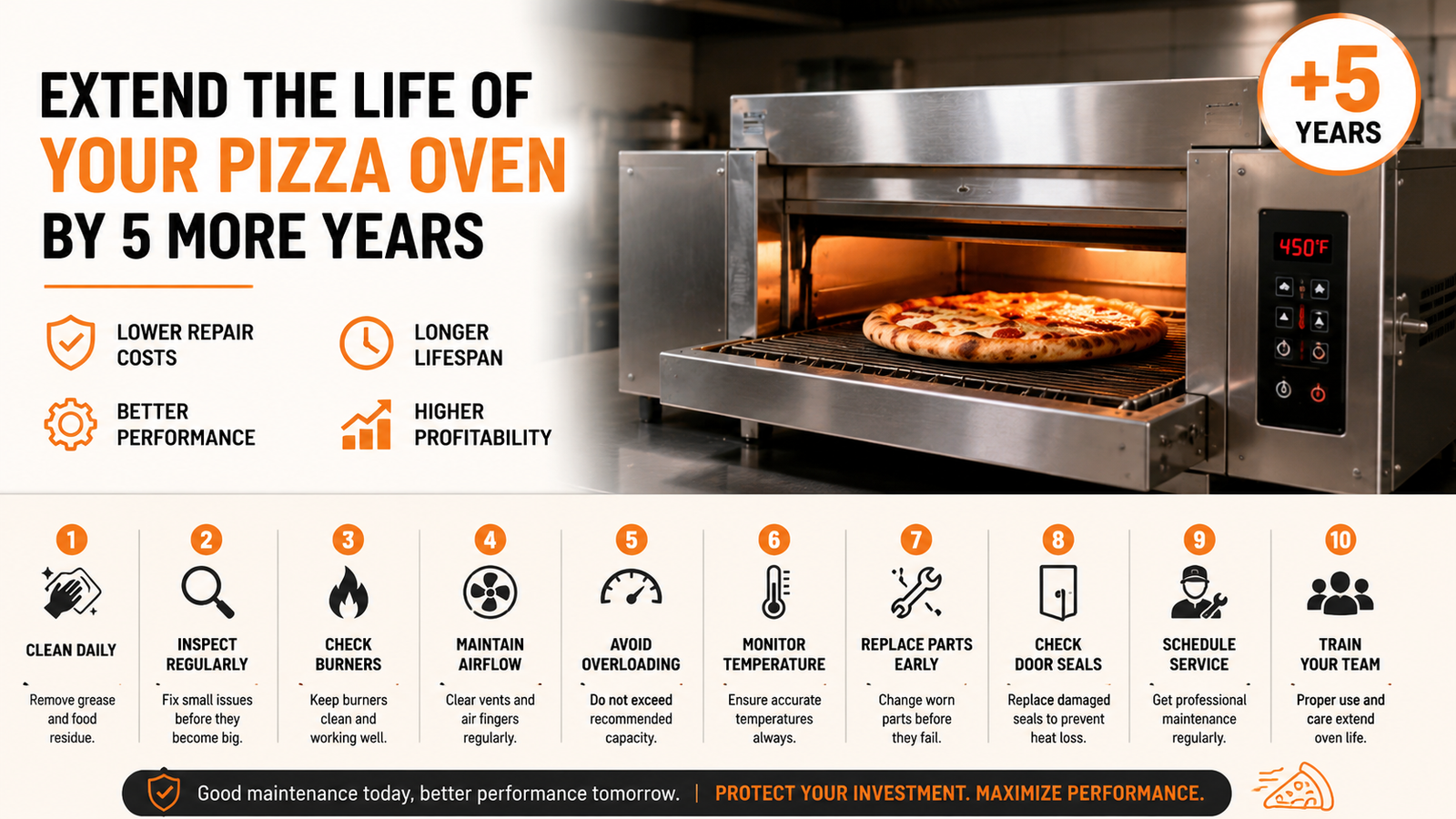
Daily Habits That Improve Gas Efficiency
Clean the Oven
Remove food residue and grease daily.
Monitor Temperature
Avoid unnecessary overheating.
Check Burners
Inspect for visible blockages.
Keep Doors Closed
Reduce heat loss whenever possible.
Train Staff
Proper operation improves efficiency.
Small habits can create meaningful long-term savings.
Recommended Maintenance Schedule
Daily
- Basic cleaning
- Visual inspection
Weekly
- Burner checks
- Vent cleaning
Monthly
- Efficiency inspection
- Temperature verification
Every 6 Months
- Professional servicing
Annually
- Complete system inspection
Regular maintenance is the most effective way to control gas costs.
Why Preventive Maintenance Pays for Itself
Many owners delay servicing to save money.
However, preventative maintenance often delivers:
- Lower gas bills
- Better cooking consistency
- Fewer breakdowns
- Reduced repair expenses
The cost of maintenance is usually far less than the cost of inefficiency.
Why Neelkanth Enterprise Recommends Regular Oven Inspections
At Neelkanth Enterprise, we help restaurants, cafés, and cloud kitchens maximize equipment performance through proper maintenance and equipment selection.
Regular inspections help businesses achieve:
- Better fuel efficiency
- Improved production consistency
- Lower operating costs
- Longer equipment life
A properly maintained oven not only performs better—it saves money every day.
Conclusion
If your pizza oven is using more gas than it should, the problem is often related to maintenance, airflow, insulation, burner performance, or operating practices.
Ignoring these issues can result in higher utility bills, reduced profitability, and unnecessary equipment wear.
The good news is that most causes of excessive gas consumption are preventable.
By implementing proper maintenance, monitoring performance, and training staff, restaurant owners can significantly improve efficiency and reduce operating costs.
A well-maintained pizza oven doesn’t just bake better pizzas—it helps build a more profitable business.
FAQs
Why is my pizza oven using more gas than before?
Common causes include dirty burners, poor maintenance, damaged seals, airflow restrictions, and aging components.
Can poor maintenance increase gas consumption?
Yes. Poorly maintained ovens often require more fuel to maintain operating temperatures.
How often should pizza oven burners be cleaned?
Burners should be inspected regularly and cleaned as part of a preventative maintenance schedule.
Do damaged door seals affect gas usage?
Yes. Damaged seals allow heat to escape, forcing the oven to consume more gas.
Can regular servicing reduce gas bills?
Absolutely. Professional maintenance often improves efficiency and lowers operating costs over time.