A commercial coffee machine works hard every day. Whether you operate a café, coffee shop, bakery, hotel, restaurant, or corporate coffee station, your machine processes hundreds of cups every week. Over time, coffee oils, milk residue, mineral deposits, and brewing waste accumulate inside the machine.
Even if your staff performs daily cleaning, deep cleaning is still essential.
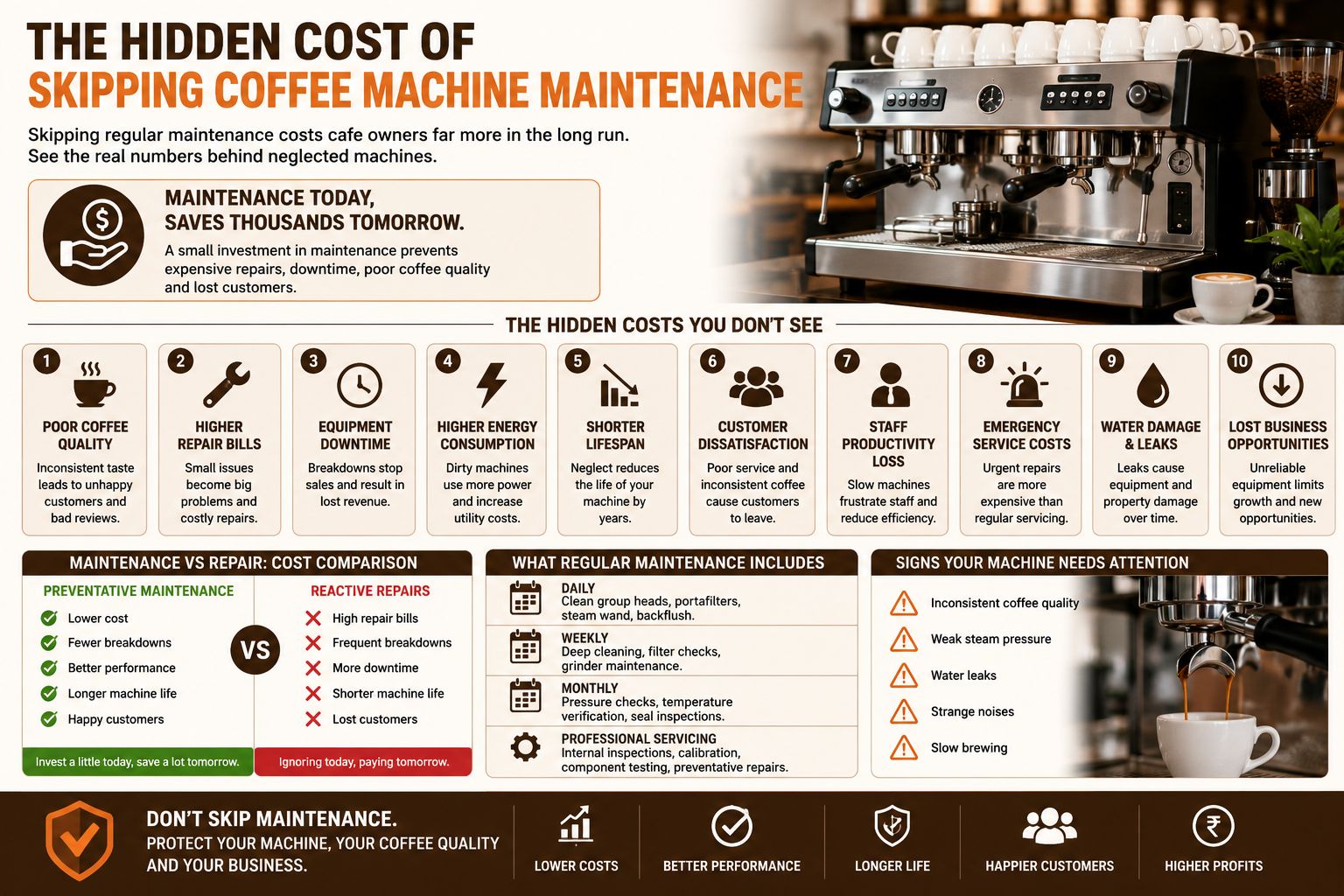
Without regular deep cleaning, coffee quality declines, maintenance costs increase, and equipment lifespan decreases. Customers may notice bitter flavors, inconsistent espresso shots, weak steam performance, or slower service.
The good news is that deep cleaning a commercial coffee machine is straightforward when done correctly.
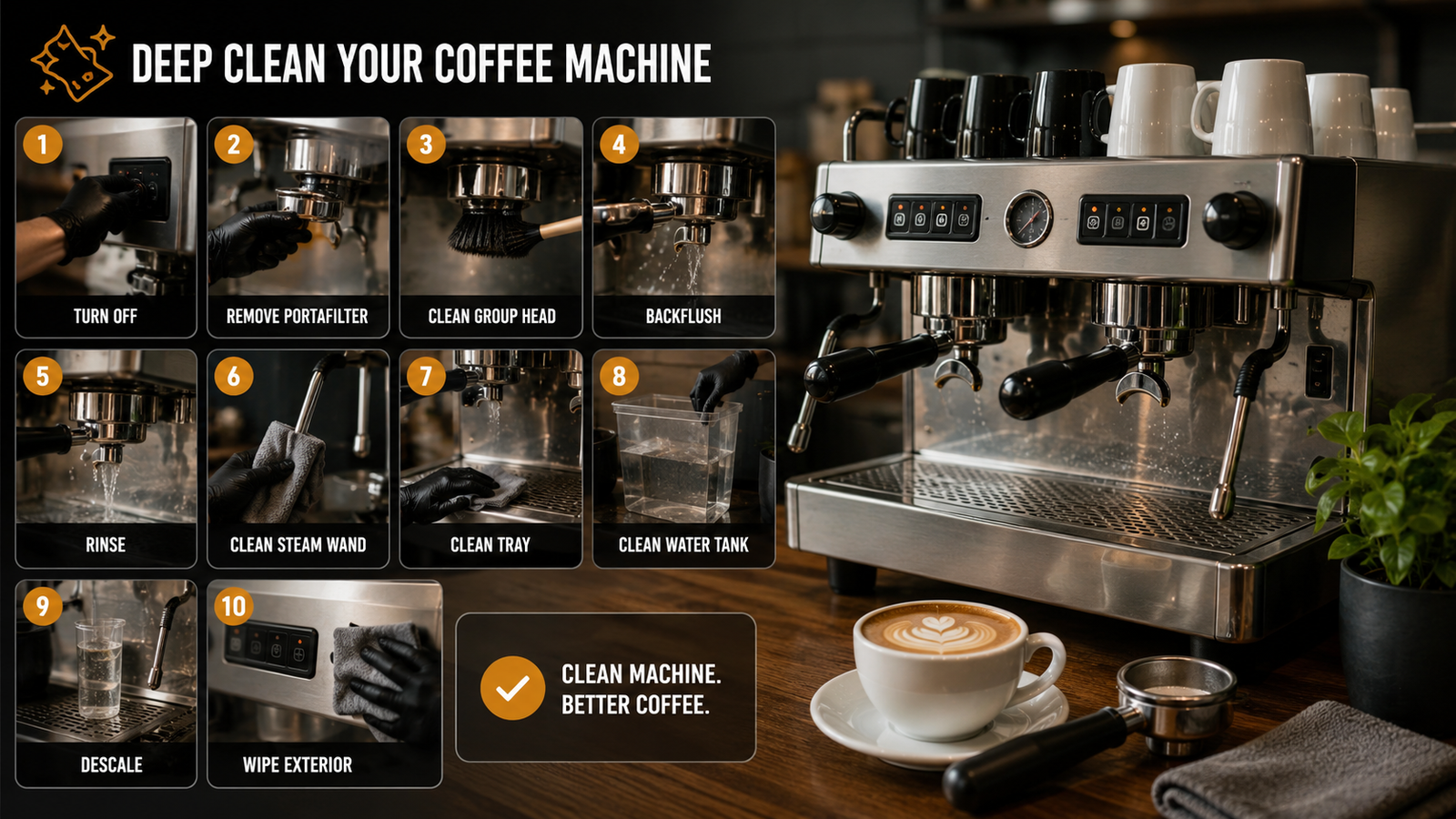
This guide explains the complete step-by-step process for deep cleaning your commercial coffee machine while improving performance, hygiene, and coffee quality.
Why Deep Cleaning Matters
Daily cleaning removes surface dirt and coffee residue.
Deep cleaning removes:
- Coffee oils
- Mineral buildup
- Hidden residue
- Milk deposits
- Internal contaminants
Benefits include:
- Better coffee flavor
- Improved extraction
- Stronger steam performance
- Longer machine life
- Reduced repair costs
- Improved hygiene compliance
Deep cleaning protects both your equipment and your reputation.
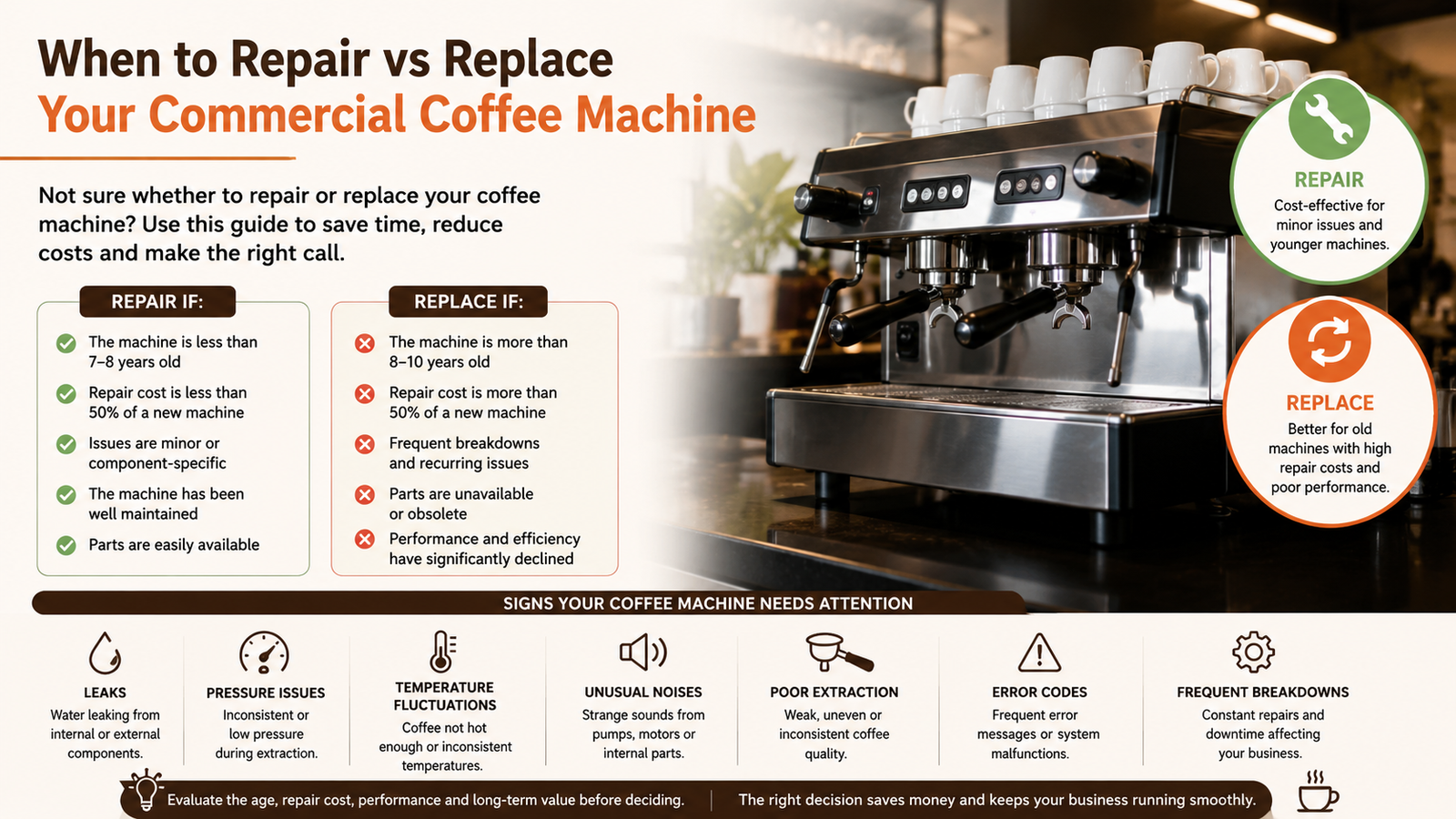
Signs Your Coffee Machine Needs Deep Cleaning
If you notice any of the following issues, it’s probably time for a deep clean:
Bitter Coffee
Coffee oils become rancid over time.
Weak Espresso
Residue can affect extraction performance.
Slow Water Flow
Mineral buildup restricts water movement.
Poor Steam Pressure
Steam wand blockages reduce performance.
Unpleasant Odors
Hidden residue often causes bad smells.
Inconsistent Coffee Quality
Dirty equipment creates inconsistent results.
Equipment You’ll Need
Before starting, gather:
- Coffee machine cleaning powder
- Cleaning tablets
- Group head brush
- Soft cloths
- Food-safe sanitizer
- Small cleaning brushes
- Descaling solution
- Bucket or container
- Protective gloves
Using proper cleaning products helps avoid equipment damage.
Step 1: Turn Off the Machine
Safety comes first.
Before beginning:
- Turn off the machine
- Allow components to cool
- Disconnect power if recommended by the manufacturer
Never clean hot components without proper precautions.
Step 2: Remove Portafilters
Remove all portafilters from the machine.
Inspect for:
- Coffee residue
- Oil buildup
- Blockages
Portafilters are often one of the dirtiest parts of the system.
Cleaning Process
Soak them in a cleaning solution according to manufacturer guidelines.
Use a brush to remove stubborn residue.
Rinse thoroughly before reinstalling.
Step 3: Clean Group Heads
Group heads directly affect coffee quality.
Over time they accumulate:
- Coffee oils
- Fine coffee particles
- Brewing residue
Cleaning Process
Use a group head brush to:
- Scrub shower screens
- Remove debris
- Clean surrounding areas
Pay special attention to hard-to-reach areas.
Step 4: Perform a Backflush Cycle
Backflushing is one of the most important deep-cleaning procedures.
How It Works
Backflushing forces cleaning solution through internal brewing pathways.
This removes:
- Coffee oils
- Hidden residue
- Internal contaminants
Procedure
- Insert blind filter basket
- Add cleaning powder
- Start cleaning cycle
- Repeat according to machine guidelines
Continue until water runs clean.
Step 5: Rinse Thoroughly
After backflushing:
- Remove cleaning solution
- Flush clean water through the system
This prevents cleaning chemicals from affecting coffee flavor.
Multiple rinse cycles may be necessary.
Step 6: Clean Steam Wands
Steam wands collect milk residue quickly.
If neglected, they can become blocked and unsanitary.
Cleaning Process
- Remove steam wand tips if possible
- Soak in approved cleaning solution
- Brush internal openings
- Rinse thoroughly
Test Performance
After cleaning:
- Activate steam
- Verify consistent pressure
Proper steam performance is essential for milk-based beverages.
Step 7: Clean Drip Trays and Drain Areas
Drip trays often accumulate:
- Coffee residue
- Milk spills
- Dirt
- Moisture
Cleaning Process
- Remove trays
- Wash thoroughly
- Sanitize surfaces
- Inspect drains for blockages
A clean drainage system helps prevent odors and hygiene issues.
Step 8: Clean Water Reservoirs
If your machine uses a water tank:
Remove Reservoir
Inspect for:
- Scale
- Dirt
- Biofilm
Clean Thoroughly
Use food-safe cleaning products.
Rinse completely before refilling.
Clean water improves coffee quality.
Step 9: Descale the Machine
Mineral buildup is one of the biggest threats to coffee machine performance.
What Scale Causes
- Reduced efficiency
- Temperature instability
- Pressure issues
- Component damage
Descaling Process
Use manufacturer-approved descaling products.
Run the descaling cycle according to instructions.
Never use harsh chemicals not recommended by the manufacturer.
Step 10: Clean Exterior Surfaces
A professional appearance matters.
Clean:
- Control panels
- Stainless steel surfaces
- Handles
- Buttons
- Display screens
Use soft cloths to avoid scratching surfaces.
Step 11: Inspect Seals and Gaskets
During cleaning, inspect:
- Group head gaskets
- Seals
- O-rings
Look for:
- Cracks
- Wear
- Damage
Replacing worn components early prevents future leaks and pressure loss.
Step 12: Test the Machine
Once cleaning is complete:
Run Test Shots
Evaluate:
- Water flow
- Extraction quality
- Pressure consistency
Test Steam Performance
Verify:
- Steam pressure
- Milk texturing capability
Monitor Temperature
Ensure stable brewing temperatures.
Everything should operate smoothly after cleaning.
How Often Should You Deep Clean?
Cleaning frequency depends on usage.
Low Usage Cafés
Every 4–6 weeks
Medium Usage Cafés
Every 2–4 weeks
High Volume Coffee Shops
Weekly or bi-weekly deep cleaning
Higher production requires more frequent maintenance.
Common Deep Cleaning Mistakes
Using Household Cleaners
Always use approved commercial products.
Skipping Backflushing
This leaves internal residue untouched.
Ignoring Steam Wands
Milk residue creates hygiene issues.
Forgetting Descaling
Scale buildup damages equipment.
Inadequate Rinsing
Cleaning chemicals can affect flavor.
Avoiding these mistakes improves results.
Benefits of Regular Deep Cleaning
Better Coffee Flavor
Cleaner machines produce cleaner flavors.
Improved Consistency
Every cup tastes more reliable.
Longer Equipment Life
Components last longer.
Lower Repair Costs
Problems are identified early.
Better Customer Satisfaction
Quality remains consistently high.
Why Successful Cafés Schedule Deep Cleaning
Leading cafés treat deep cleaning as a routine business process.
They understand that:
- Clean machines make better coffee
- Maintenance prevents downtime
- Equipment lasts longer
- Customers notice quality
Deep cleaning is not just maintenance—it is quality control.
Why Neelkanth Enterprise Recommends Preventive Cleaning
At Neelkanth Enterprise, we work with cafés, restaurants, bakeries, and food businesses that rely on commercial coffee equipment every day.
Regular deep cleaning helps businesses achieve:
- Better beverage quality
- Improved efficiency
- Lower maintenance costs
- Greater reliability
- Longer equipment lifespan
A clean machine consistently delivers better business results.
Conclusion
Deep cleaning a commercial coffee machine is one of the most effective ways to maintain coffee quality, improve equipment performance, and reduce long-term operating costs.
By following a structured cleaning routine that includes group heads, portafilters, steam wands, descaling, and internal cleaning, café owners can protect their investment and deliver consistently excellent coffee.
The best cafés don’t wait for problems to appear—they prevent them through regular maintenance and deep cleaning.
A clean coffee machine doesn’t just produce better coffee—it supports a better customer experience and a more profitable business.
FAQs
How often should a commercial coffee machine be deep cleaned?
Most cafés should deep clean every 2–4 weeks, while high-volume operations may require weekly cleaning.
Is backflushing necessary?
Yes. Backflushing removes internal coffee oils and residue that normal cleaning cannot reach.
Can scale buildup affect coffee quality?
Absolutely. Scale impacts temperature, pressure, and extraction consistency.
Should steam wands be deep cleaned?
Yes. Steam wands accumulate milk residue and require regular cleaning for hygiene and performance.
What is the biggest benefit of deep cleaning?
Improved coffee quality, better machine performance, and longer equipment lifespan.