A commercial pizza oven is one of the most valuable investments in any pizza restaurant, café, cloud kitchen, hotel, or food court. Whether you use a conveyor oven, deck oven, gas oven, or electric oven, the equipment works hard every day to deliver consistent results.
Unfortunately, many businesses unknowingly shorten the lifespan of their ovens through poor maintenance habits, improper cleaning, and delayed servicing.
The good news is that extending the life of your pizza oven doesn’t require expensive upgrades. A few simple maintenance practices can help your oven operate efficiently for years longer than expected.
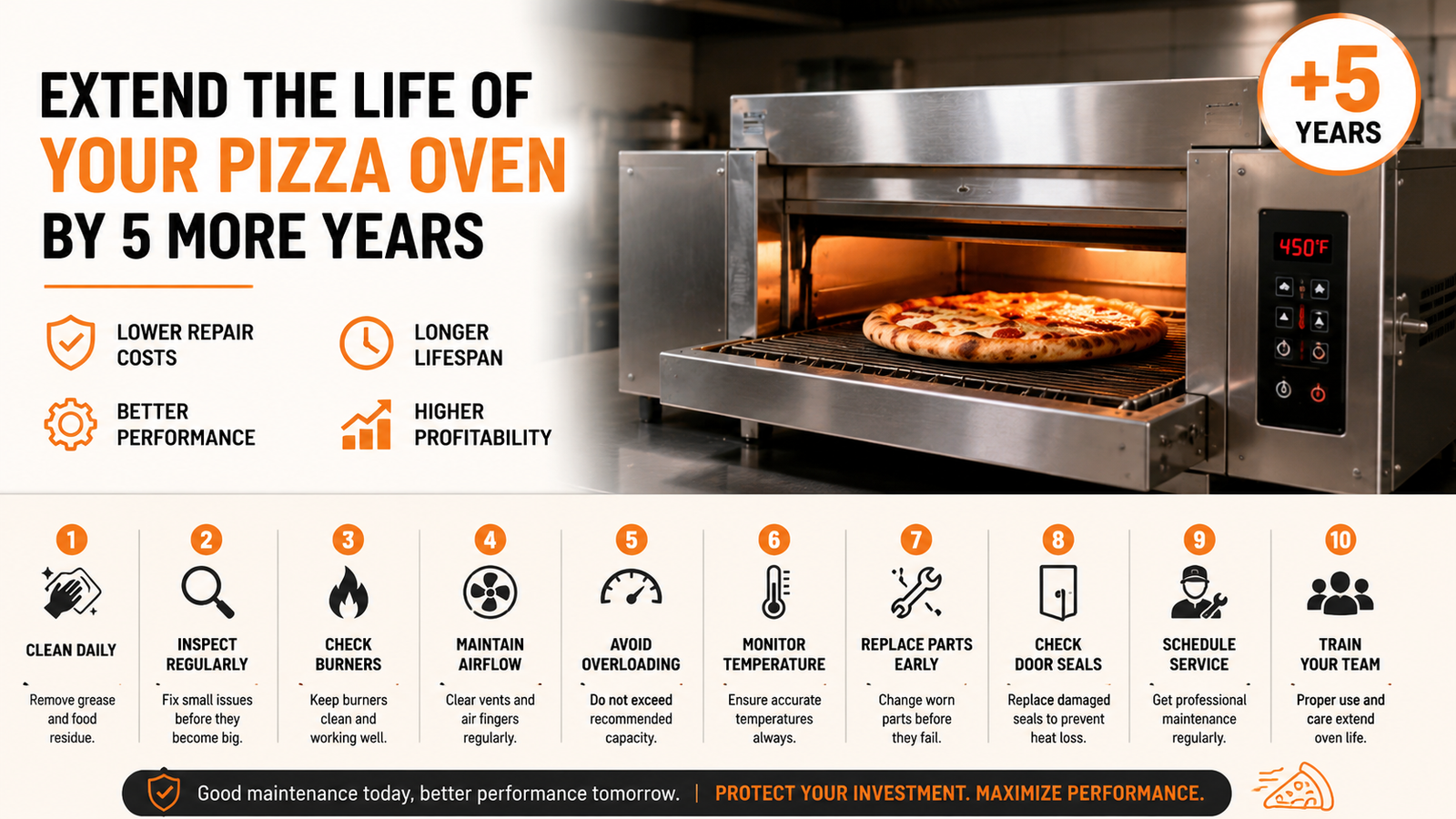
In this guide, we’ll explain how to add up to five extra years to your commercial pizza oven’s lifespan while improving performance and reducing repair costs.
Why Pizza Oven Lifespan Matters
A commercial pizza oven is a long-term investment.
When properly maintained, a quality oven can provide:
- Consistent pizza quality
- Lower operating costs
- Better energy efficiency
- Fewer breakdowns
- Higher profitability
When neglected, even an expensive oven can develop problems much earlier than expected.
Extending oven life means protecting your investment and maximizing return on investment.
How Long Should a Commercial Pizza Oven Last?
The average lifespan depends on:
- Oven type
- Usage volume
- Maintenance quality
- Operating conditions
Typical ranges include:
Conveyor Pizza Ovens
10–15 years or more
Deck Ovens
10–20 years
Gas Pizza Ovens
10–15 years
Electric Pizza Ovens
8–15 years
Proper maintenance can significantly extend these estimates.
Tip #1: Clean the Oven Every Day
Daily cleaning is the easiest way to extend oven life.
Remove:
- Cheese residue
- Flour buildup
- Grease
- Food debris
These materials can:
- Restrict airflow
- Reduce efficiency
- Cause overheating
- Damage components
Daily Cleaning Checklist
- Wipe interior surfaces
- Clean conveyor belt
- Remove food residue
- Empty grease trays
- Clean exterior panels
A clean oven always performs better.
Tip #2: Don’t Ignore Small Problems
Many major repairs begin as small issues.
Examples include:
- Strange noises
- Temperature fluctuations
- Slow heating
- Minor gas leaks
- Conveyor belt issues
Ignoring these warning signs often leads to:
- Costly repairs
- Downtime
- Equipment damage
Fix small problems before they become large ones.
Tip #3: Inspect Burners Regularly
For gas ovens, burners are critical.
Over time burners collect:
- Dust
- Grease
- Carbon deposits
Dirty burners reduce efficiency and increase wear.
Signs Burners Need Attention
- Uneven flames
- Yellow flames
- Slow heating
- Higher gas consumption
Routine inspections improve both performance and lifespan.
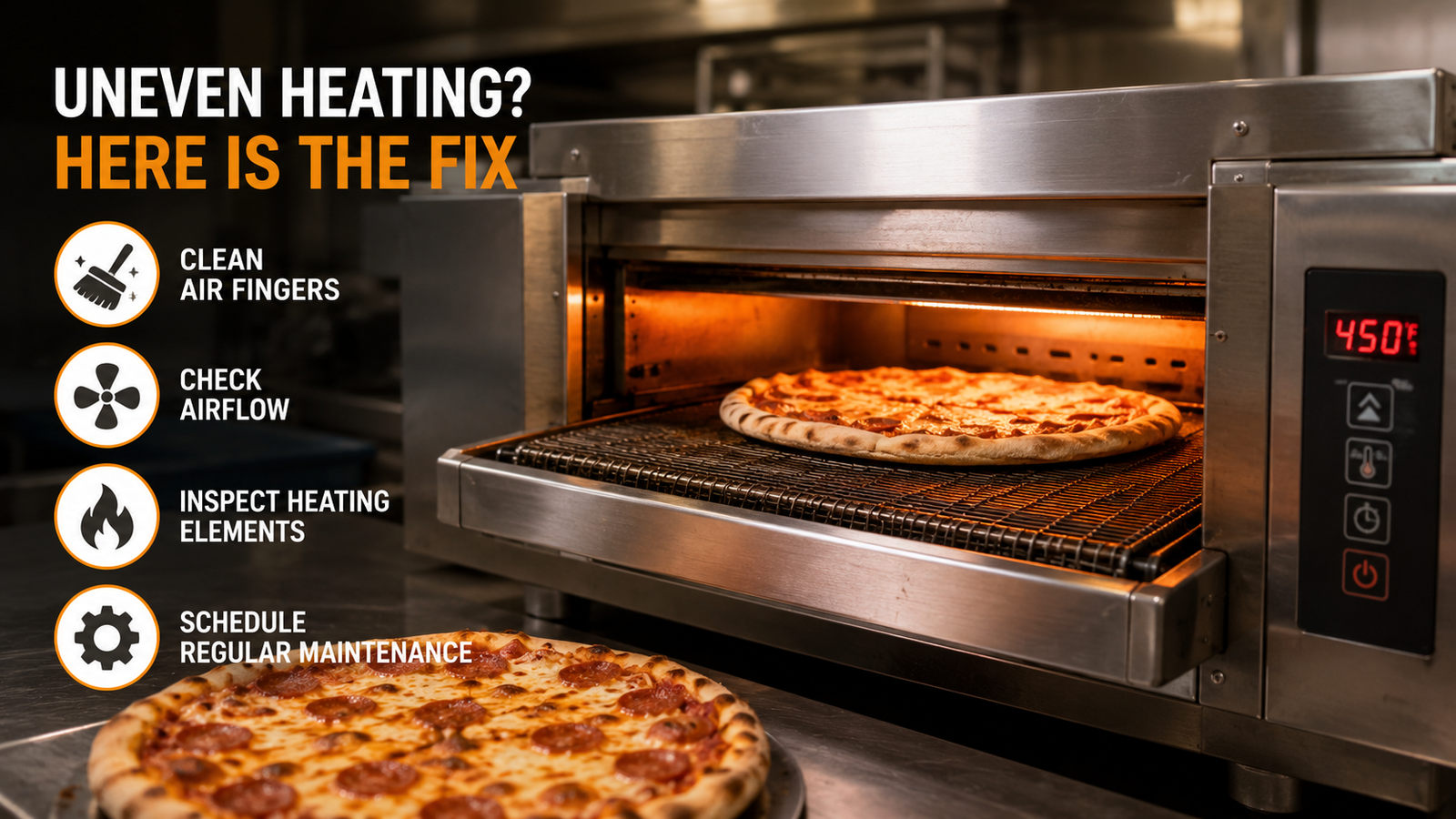
Tip #4: Keep Airflow Systems Clean
Conveyor ovens rely heavily on airflow.
Blocked airflow causes:
- Uneven heating
- Overheating
- Reduced efficiency
Inspect regularly:
- Air fingers
- Vents
- Fans
- Air passages
Proper airflow protects heating components from excessive stress.
Tip #5: Avoid Overloading the Oven
Many operators push equipment beyond its intended capacity.
Overloading creates:
- Higher operating temperatures
- Increased wear
- Faster component deterioration
Always operate within manufacturer recommendations.
Consistent workloads improve reliability.
Tip #6: Monitor Temperature Accuracy
Incorrect temperatures can strain oven components.
If temperatures drift:
- Burners work harder
- Heating elements operate longer
- Energy usage increases
Use calibrated thermometers periodically to verify accuracy.
Temperature consistency helps extend component life.
Tip #7: Replace Worn Parts Early
Every commercial oven contains wear items such as:
- Belts
- Gaskets
- Seals
- Bearings
- Ignition components
Replacing worn parts early prevents secondary damage.
A small repair today often prevents a major repair tomorrow.
Tip #8: Protect Door Seals
Door seals are frequently overlooked.
Damaged seals cause:
- Heat loss
- Higher fuel consumption
- Longer cooking times
Inspect seals monthly.
Replace damaged seals immediately.
This simple step improves efficiency and protects heating systems.
Tip #9: Schedule Professional Maintenance
Professional servicing remains essential.
A qualified technician can:
- Inspect burners
- Verify temperatures
- Test safety systems
- Check airflow
- Calibrate controls
Many expensive failures are prevented during routine inspections.
Tip #10: Train Staff Properly
Even the best equipment can be damaged by improper use.
Train staff on:
- Correct startup procedures
- Proper shutdown procedures
- Cleaning routines
- Safe operation
Well-trained staff significantly reduce equipment wear.
Common Mistakes That Shorten Oven Life
Skipping Daily Cleaning
Residue buildup damages components over time.
Ignoring Maintenance
Small problems become expensive failures.
Using Incorrect Cleaning Products
Harsh chemicals can damage surfaces and components.
Delaying Repairs
Minor issues often cause larger failures.
Running the Oven Continuously
Unnecessary operation increases wear and fuel consumption.
Avoiding these mistakes can add years to equipment life.
Benefits of Extending Oven Lifespan
Lower Replacement Costs
Equipment lasts longer before requiring replacement.
Reduced Downtime
Fewer breakdowns mean smoother operations.
Better Pizza Quality
Consistent performance produces consistent results.
Lower Energy Bills
Efficient equipment consumes less fuel.
Higher Profitability
Reduced repair and replacement expenses improve margins.
Sample Monthly Maintenance Checklist
Weekly
- Clean burners
- Inspect conveyor belt
- Check airflow
Monthly
- Inspect seals
- Verify temperatures
- Check moving components
Quarterly
- Deep cleaning
- Performance testing
Every 6 Months
- Professional inspection
Annually
- Full preventative maintenance service
Consistency is the key to long equipment life.
Why Preventive Maintenance Pays Off
Many operators see maintenance as an expense.
In reality, maintenance is an investment.
Preventive maintenance helps:
- Avoid major repairs
- Improve reliability
- Extend lifespan
- Reduce operating costs
The savings often exceed maintenance costs many times over.
Why Neelkanth Enterprise Recommends Regular Oven Care
At Neelkanth Enterprise, we help restaurants, cafés, pizza outlets, and cloud kitchens maximize equipment performance and lifespan.
Regular maintenance helps businesses achieve:
- Better efficiency
- Lower repair costs
- Consistent food quality
- Greater reliability
- Stronger return on investment
Proper care can add years of productive life to commercial pizza ovens.
Conclusion
Extending the life of your pizza oven by five or more years is entirely possible with the right maintenance habits.
Daily cleaning, routine inspections, proper staff training, airflow management, and professional servicing all play an important role in protecting your investment.
The cost of preventative maintenance is small compared to the cost of premature replacement.
A well-maintained pizza oven not only lasts longer—it performs better, consumes less energy, and helps your business remain profitable for years to come.
FAQs
How long should a commercial pizza oven last?
Most commercial pizza ovens last between 10 and 15 years, though proper maintenance can extend lifespan significantly.
What is the most important maintenance task?
Daily cleaning is one of the most effective ways to protect oven performance and longevity.
Can dirty burners shorten oven life?
Yes. Dirty burners reduce efficiency and place additional stress on heating systems.
How often should a pizza oven be professionally serviced?
Most commercial ovens should receive professional maintenance every 6 to 12 months.
Does regular maintenance really save money?
Absolutely. Preventive maintenance reduces repair costs, improves efficiency, and delays expensive equipment replacement.