Surat is one of the fastest-growing cities in Gujarat and has become a hotspot for cafés, coffee shops, bakeries, and food startups. With a young population, growing disposable income, strong business culture, and increasing demand for premium food experiences, opening a café in Surat can be a profitable business opportunity.
However, many first-time café owners underestimate the planning, investment, licensing, and operational challenges involved. Some spend heavily on interiors but ignore equipment quality. Others choose the wrong location or fail to understand their target customers.
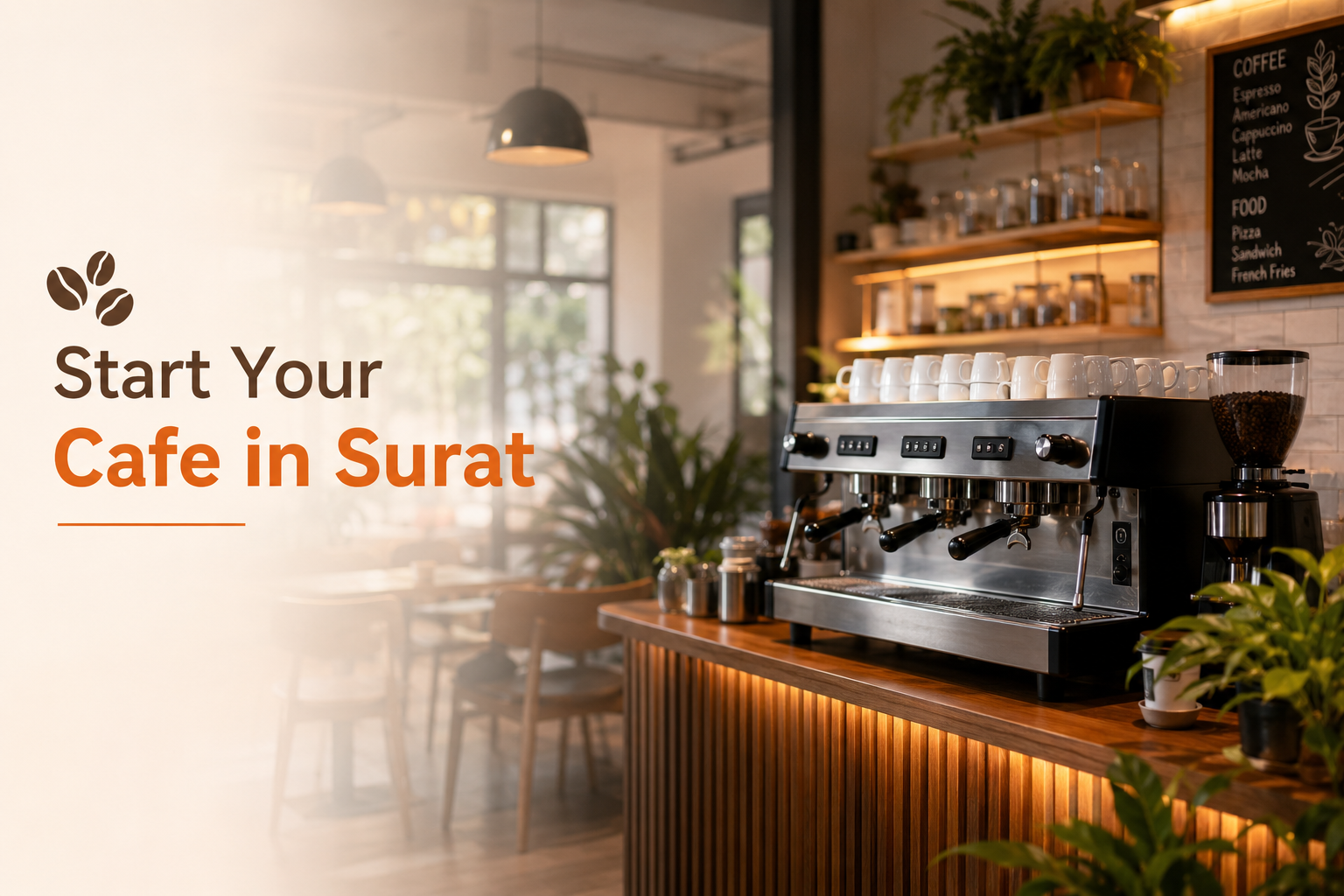
This guide provides a practical step-by-step roadmap for anyone planning to start a café in Surat in 2026.
Why Surat Is a Good City for Cafés
Surat offers several advantages for café businesses.
Growing Youth Population
College students and young professionals actively seek café experiences.
Strong Purchasing Power
Surat’s business community supports premium dining and café concepts.
Expanding Food Culture
Consumers are increasingly exploring:
- Specialty coffee
- Artisan beverages
- Pizza
- Fast casual dining
- Bakery products
Growth of Delivery Platforms
Online food delivery creates additional revenue opportunities.
For these reasons, Surat continues to attract new café entrepreneurs.
Step 1: Choose Your Café Concept
Before renting a location or purchasing equipment, define your concept.
Common café models include:
Coffee-Focused Café
Focus on:
- Espresso beverages
- Specialty coffee
- Premium coffee experiences
Café and Fast Food Combination
Offer:
- Pizza
- Sandwiches
- Pasta
- Burgers
Bakery Café
Combine:
- Cakes
- Pastries
- Coffee
Student Café
Affordable menu with high customer volume.
Premium Lifestyle Café
Upscale ambiance targeting higher-spending customers.
Your concept determines equipment, menu, location, and investment requirements.
Step 2: Research the Right Location
Location remains one of the most important factors.
Popular café areas in Surat include:
- Vesu
- Adajan
- Piplod
- City Light
- Pal
- VIP Road
- Althan
Look for locations with:
- Good visibility
- Parking availability
- Foot traffic
- Residential density
- Student population
A great location can significantly improve your chances of success.
Step 3: Estimate Startup Costs
One of the biggest mistakes new owners make is underestimating investment requirements.
Typical café startup costs include:
Rent Deposit
Varies based on location.
Interior Design
Includes:
- Furniture
- Lighting
- Branding
- Décor
Kitchen Equipment
Includes:
- Coffee machine
- Coffee grinder
- Refrigeration
- Pizza oven
- Blender
- Water filtration system
Licenses and Registrations
Mandatory legal requirements.
Initial Inventory
Coffee beans, ingredients, packaging, and supplies.
Staff Salaries
At least 2–6 months of operating reserves are recommended.
Step 4: Obtain Required Licenses
Several licenses are typically required.
FSSAI License
Mandatory for food businesses.
Shop and Establishment Registration
Required for legal business operations.
GST Registration
Depending on turnover and business structure.
Fire Safety Compliance
May be required based on premises size.
Local Municipal Permissions
Check current Surat Municipal Corporation requirements.
Always verify regulations before opening.
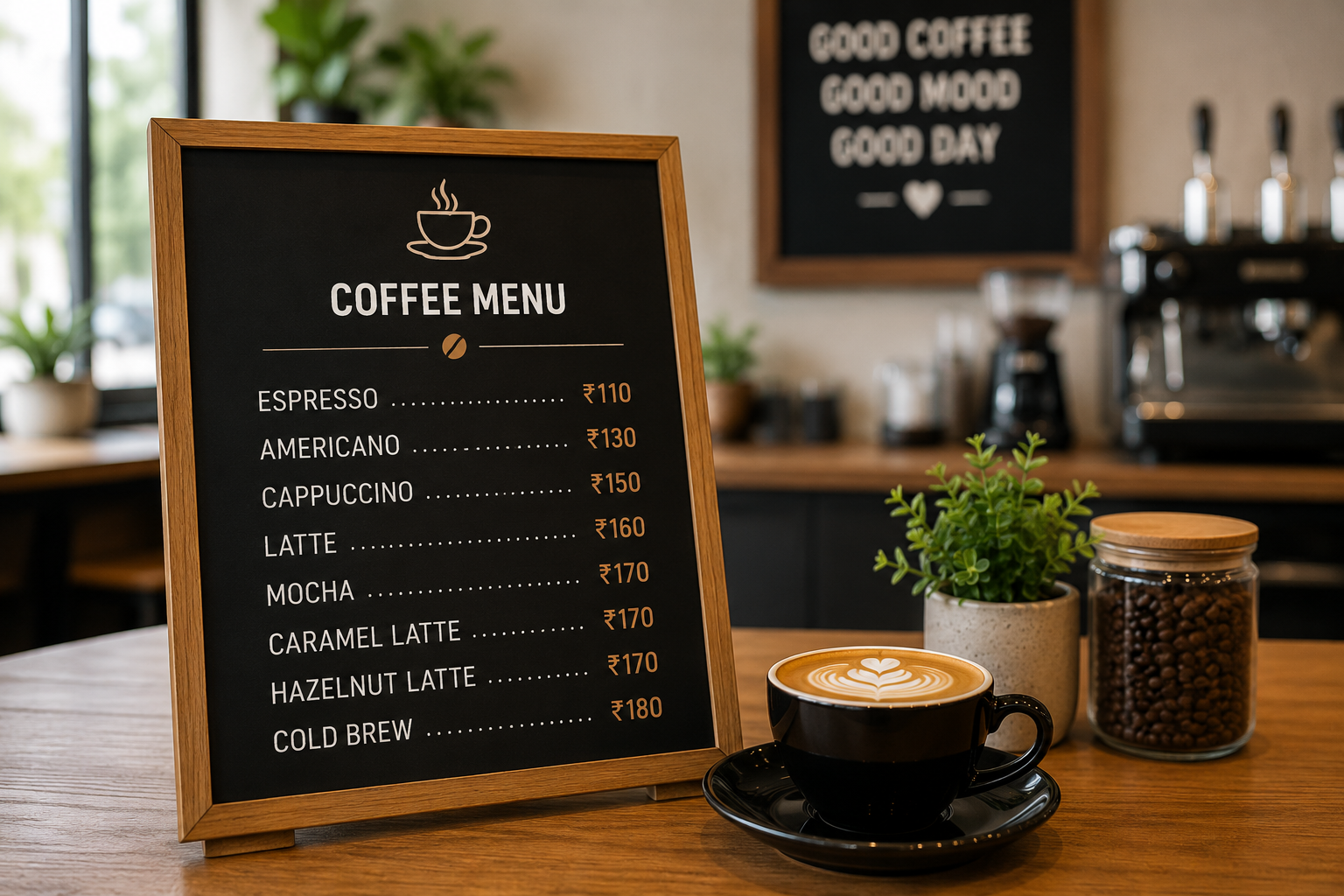
Step 5: Design Your Menu Carefully
Many cafés fail because they offer too many items.
Start with a focused menu.
Popular categories include:
Coffee
- Espresso
- Cappuccino
- Latte
- Americano
- Cold coffee
Fast Food
- Pizza
- Garlic bread
- Sandwiches
- Burgers
Bakery Items
- Cakes
- Muffins
- Cookies
Specialty Drinks
- Mocktails
- Smoothies
- Shakes
A smaller menu is often easier to manage and more profitable.
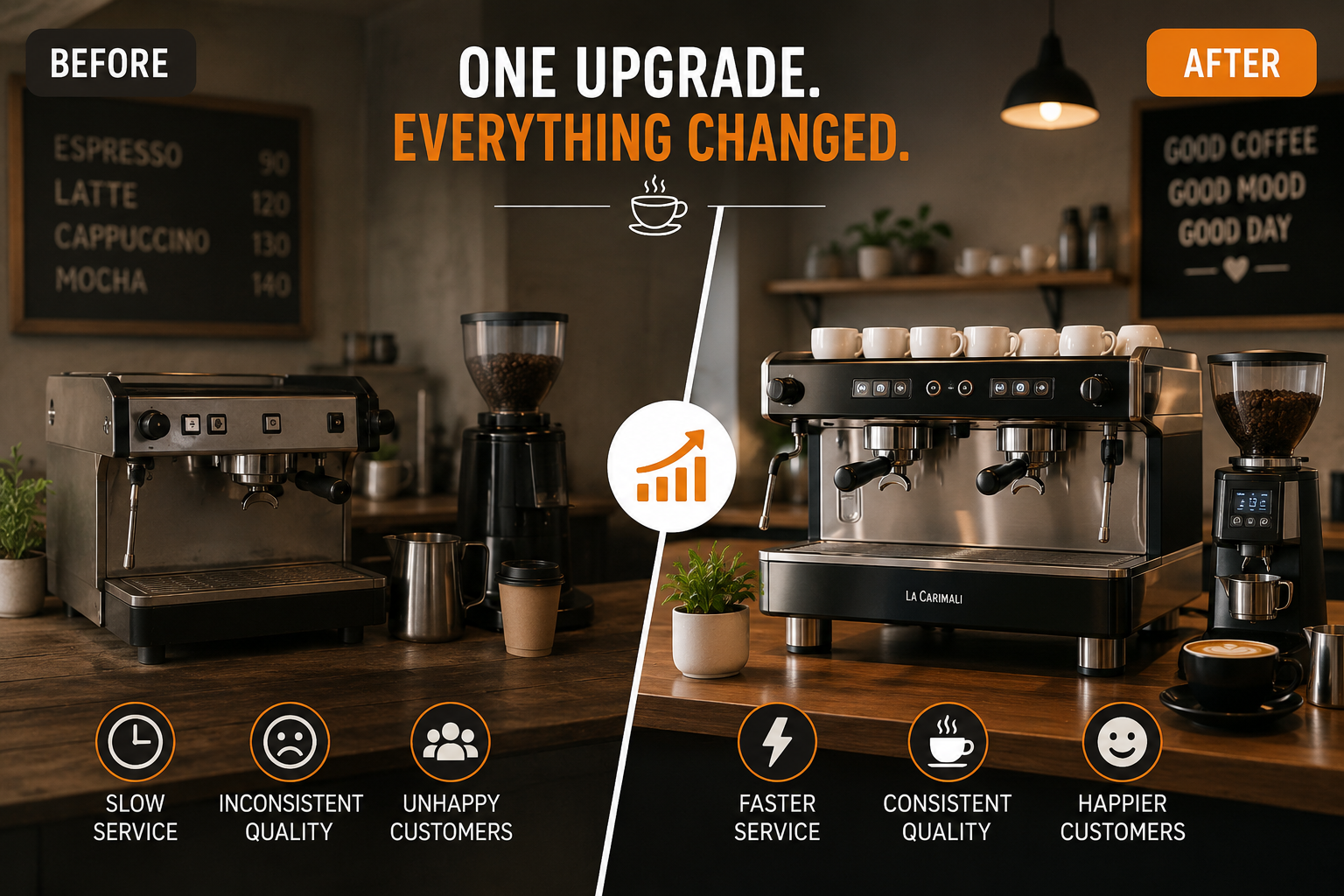
Step 6: Select the Right Equipment
Equipment quality directly impacts consistency and customer experience.
Coffee Equipment
Invest in:
- Commercial coffee machine
- Coffee grinder
- Water filtration system
Food Equipment
Depending on your menu:
- Conveyor pizza oven
- Deck oven
- Refrigeration units
- Prep tables
Support Equipment
- POS system
- Storage units
- Display counters
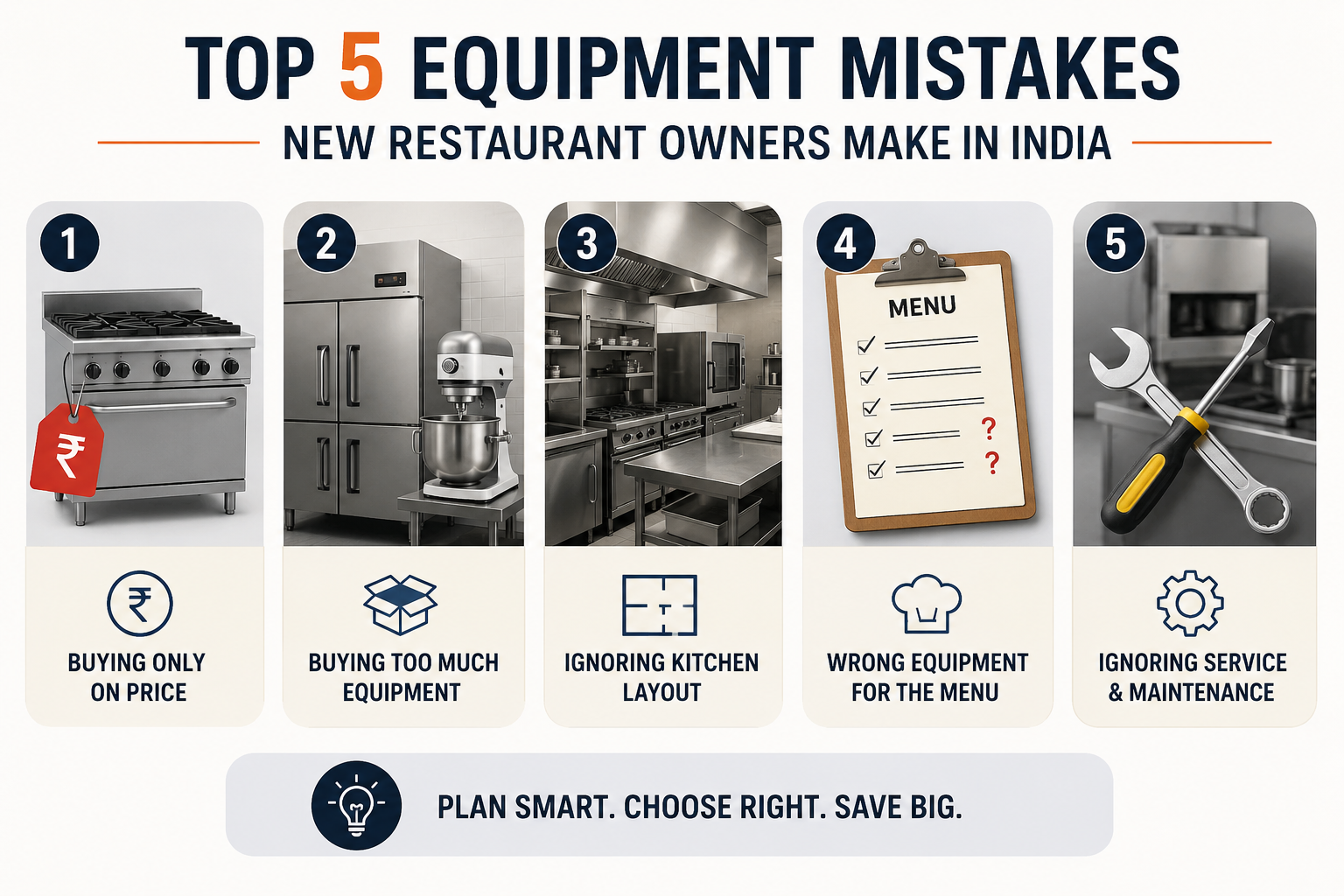
Avoid buying equipment based solely on price.
Step 7: Plan Kitchen Workflow
A well-designed kitchen improves efficiency.
Focus on:
- Smooth staff movement
- Fast order preparation
- Proper storage
- Hygiene compliance
Poor workflow often leads to slower service and operational problems.
Step 8: Hire and Train Staff
Even excellent equipment cannot compensate for poorly trained staff.
Key roles include:
Barista
Responsible for beverage quality.
Kitchen Staff
Handles food preparation.
Service Staff
Manages customer interactions.
Training should cover:
- Product preparation
- Customer service
- Hygiene standards
- Equipment handling
Consistency depends heavily on staff training.
Step 9: Create a Marketing Plan
Many café owners spend heavily on interiors but ignore marketing.
Before opening:
Create Social Media Profiles
Use:
- Google Business Profile
Develop Content
Post:
- Menu items
- Behind-the-scenes content
- Café photos
Launch Promotions
Offer opening specials to attract customers.
Marketing should begin before opening day.
Step 10: Prepare for Delivery Orders
Food delivery is now essential.
Register on:
- Swiggy
- Zomato
Optimize your menu for:
- Delivery quality
- Packaging
- Speed
Delivery can become a major revenue source.
Common Mistakes New Café Owners Make
Choosing the Wrong Location
A poor location can limit growth.
Overspending on Interiors
Beautiful interiors cannot compensate for poor food or service.
Buying Cheap Equipment
Low-quality equipment often creates long-term expenses.
Weak Marketing
Customers must know you exist.
Ignoring Working Capital
Many businesses struggle because they run out of operating funds.
Avoiding these mistakes improves your chances of success.
How Much Can a Café Earn in Surat?
Revenue depends on:
- Location
- Menu
- Customer traffic
- Pricing strategy
- Marketing effectiveness
Successful cafés often generate strong returns, but profitability requires careful planning and execution.
There is no guaranteed revenue figure, which is why budgeting and market research are essential.
Why Equipment Selection Is Critical
Equipment affects:
- Product quality
- Service speed
- Operating costs
- Customer satisfaction
Investing in reliable commercial equipment often reduces maintenance expenses and improves consistency.
The right equipment helps create repeat customers.
Why Neelkanth Enterprise Supports New Café Businesses
At Neelkanth Enterprise, we work with cafés, restaurants, bakeries, and food startups across Gujarat.
We help businesses choose:
- Commercial coffee machines
- Pizza ovens
- Kitchen equipment
- Food service solutions
Our goal is to help entrepreneurs build efficient operations with equipment that supports long-term growth.
Conclusion
Starting a café in Surat can be an exciting and rewarding business opportunity, but success requires more than passion alone.
The most successful café owners focus on:
- Choosing the right concept
- Selecting a strong location
- Investing in quality equipment
- Training staff properly
- Marketing consistently
- Managing finances carefully
By following a structured approach and avoiding common mistakes, you can build a café that attracts loyal customers and grows sustainably over time.
Surat’s café market continues to expand, making now an excellent time for well-planned entrepreneurs to enter the industry.
FAQs
How much investment is required to start a café in Surat?
Investment varies based on size, location, interiors, and equipment, but proper budgeting is essential before starting.
Which area is best for opening a café in Surat?
Popular areas include Vesu, Piplod, City Light, Adajan, Pal, and VIP Road.
Is FSSAI required for cafés?
Yes. Food businesses generally require FSSAI registration or licensing.
What equipment is essential for a café?
Commercial coffee machines, grinders, refrigeration, food preparation equipment, and POS systems are commonly required.
Can a small café be profitable in Surat?
Yes. With the right location, menu, operations, and marketing strategy, a small café can become a profitable business.