Many cafe owners believe that business growth comes from better marketing, a larger menu, or expensive interior renovations. While those factors matter, sometimes a single equipment upgrade can have a bigger impact than all of them combined.
This is the story of how one Surat cafe transformed its operations, improved coffee quality, increased customer satisfaction, and boosted sales simply by upgrading its commercial coffee machine.
Although every cafe is different, the lessons from this experience apply to almost every coffee business in India.
The Problem: A Growing Cafe With Growing Challenges
A popular cafe in Surat had been operating successfully for nearly two years.
Business was increasing steadily, especially during:
- Morning rush hours
- Evening peak times
- Weekends
At first, this growth seemed like a positive problem.
However, the cafe soon started facing operational issues.
Common Complaints
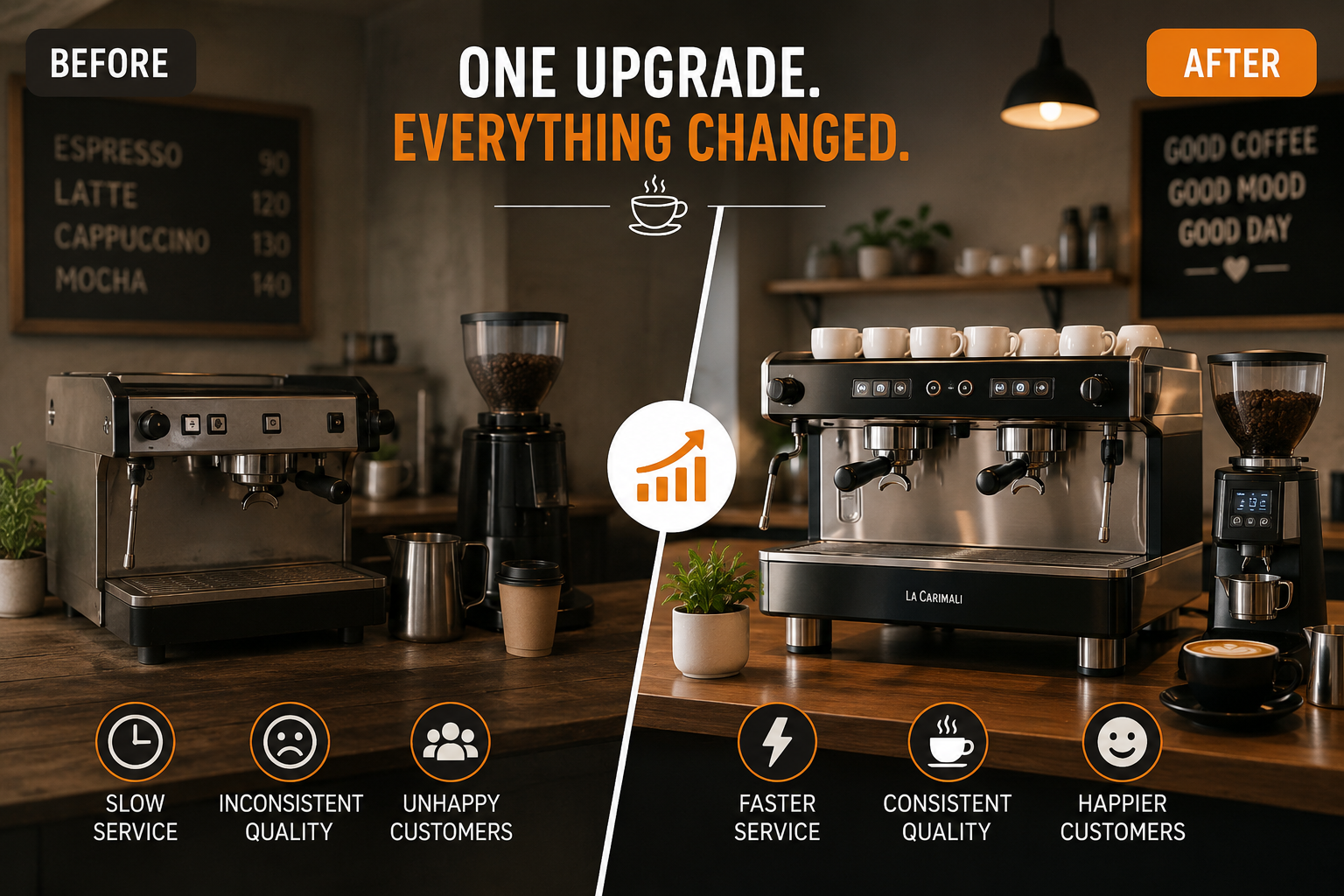
Customers began noticing:
- Inconsistent coffee quality
- Longer waiting times
- Different taste profiles between visits
Staff also experienced difficulties.
Operational Problems
The existing coffee machine struggled with:
- High order volumes
- Temperature consistency
- Steam pressure stability
- Back-to-back drink preparation
The machine was originally suitable for a smaller operation but could no longer keep up with demand.
The Hidden Cost of Outdated Equipment
Many owners focus only on repair costs when evaluating equipment.
However, outdated equipment creates hidden expenses.
These include:
Slower Service
Longer preparation times reduce customer throughput.
Customer Frustration
Customers dislike waiting for beverages.
Inconsistent Coffee
Quality variations damage customer trust.
Staff Stress
Employees work harder to compensate for equipment limitations.
Lost Revenue
Peak-hour capacity becomes restricted.
The cafe was experiencing all of these issues.
Identifying the Root Cause
Initially, management suspected:
- Staff training issues
- Recipe inconsistencies
- Customer volume fluctuations
After closer analysis, they realized the coffee machine itself had become the bottleneck.
Key indicators included:
Steam Performance Drops
During busy periods, milk steaming slowed significantly.
Temperature Fluctuations
Espresso quality varied throughout the day.
Frequent Maintenance
The machine required increasingly frequent service calls.
Limited Output Capacity
The machine struggled to handle multiple orders simultaneously.
It became clear that equipment limitations were affecting business performance.
The Upgrade Decision
The cafe management evaluated several options.
They considered:
- Continuing repairs
- Purchasing another small machine
- Investing in a larger commercial coffee machine
After calculating long-term costs and growth projections, they decided to upgrade to a higher-capacity commercial coffee machine.
The goal was not simply replacing equipment.
The goal was improving:
- Efficiency
- Consistency
- Customer experience
Immediate Improvements After Installation
The impact was noticeable almost immediately.
Faster Beverage Preparation
Baristas could prepare drinks more quickly during peak hours.
This reduced customer waiting times significantly.
Better Steam Performance
Milk-based beverages became easier to prepare.
Staff reported:
- Better texture
- Faster steaming
- More consistent results
Improved Workflow
Employees could handle more orders without feeling overwhelmed.
The overall operation became smoother.
Coffee Quality Improved Dramatically
One of the biggest changes was beverage consistency.
The upgraded machine offered:
Stable Brewing Temperature
Consistent extraction quality.
Better Pressure Control
Improved espresso shots.
Reliable Performance
Uniform taste throughout the day.
Customers quickly noticed the difference.
Customer Satisfaction Increased
Within weeks, the cafe began receiving positive feedback.
Customers commented on:
- Better coffee taste
- Faster service
- Improved consistency
Repeat visits increased.
Customer loyalty strengthened because people knew they could expect the same quality every time.
Peak-Hour Service Became Easier
Previously, weekends created operational stress.
Long queues often formed during busy periods.
After upgrading:
More Orders Processed
Higher capacity improved throughput.
Shorter Wait Times
Customers received drinks faster.
Better Staff Productivity
Employees worked more efficiently.
Peak periods became manageable instead of stressful.
Revenue Growth Followed
Interestingly, revenue improvements came from operational improvements.
The cafe experienced:
More Orders Per Hour
Faster preparation increased sales capacity.
Better Customer Retention
Satisfied customers returned more frequently.
Improved Reputation
Word-of-mouth recommendations increased.
Higher Average Sales
Customers were more likely to purchase additional items.
The equipment upgrade contributed directly to business growth.
Staff Confidence Improved
Equipment affects employee performance more than many owners realize.
The upgraded machine allowed staff to:
- Work faster
- Deliver consistent quality
- Handle busy periods confidently
Employee morale improved because daily operations became easier.
Maintenance Costs Decreased
Before upgrading, repair expenses were becoming common.
The new machine offered:
- Greater reliability
- Better efficiency
- Reduced downtime
Unexpected repair costs decreased significantly.
Lessons for Other Cafe Owners
This story highlights several important lessons.
Equipment Can Become a Bottleneck
A growing business may outgrow its original equipment.
Repairs Aren’t Always the Best Solution
Repeated repairs often become more expensive than upgrading.
Consistency Matters
Customers return when quality remains consistent.
Capacity Supports Growth
Reliable equipment allows businesses to handle increased demand.
Equipment Is an Investment
The right equipment often generates returns through better operations and customer satisfaction.
Signs Your Cafe May Need an Upgrade
You should evaluate your equipment if you experience:
Long Customer Wait Times
Frequent Breakdowns
Inconsistent Coffee Quality
Reduced Steam Performance
Growing Repair Costs
Increased Customer Complaints
These signs often indicate that equipment limitations are affecting performance.
Why Successful Cafes Upgrade Before Problems Become Severe
Many successful cafe owners don’t wait for complete equipment failure.
Instead, they monitor:
- Performance
- Capacity
- Maintenance costs
- Customer feedback
Proactive upgrades help maintain growth and avoid operational disruptions.
Why Neelkanth Enterprise Helps Cafes Scale Efficiently
At Neelkanth Enterprise, we work with cafes, restaurants, bakeries, and food businesses across Gujarat.
We help businesses select equipment that supports:
- Consistent quality
- Faster service
- Operational efficiency
- Long-term profitability
Choosing the right commercial coffee machine is one of the most important decisions a growing cafe can make.
Conclusion
The success story of this Surat cafe demonstrates that sometimes a single equipment upgrade can transform an entire business.
By upgrading its commercial coffee machine, the cafe improved:
- Coffee quality
- Service speed
- Customer satisfaction
- Staff productivity
- Revenue potential
For cafe owners experiencing growth, evaluating equipment performance is essential.
The right coffee machine isn’t just a tool—it’s a key part of delivering exceptional customer experiences and supporting long-term business success.
FAQs
When should a cafe upgrade its coffee machine?
When demand exceeds machine capacity, repairs become frequent, or coffee quality becomes inconsistent.
Does a better coffee machine improve sales?
Indirectly, yes. Better quality and faster service often lead to higher customer satisfaction and repeat business.
How does equipment affect customer experience?
Equipment impacts drink quality, service speed, consistency, and reliability.
Is upgrading better than repeatedly repairing old equipment?
In many cases, yes. Frequent repairs can become more expensive over time.
What should cafes consider when upgrading?
Capacity, reliability, service support, energy efficiency, and future growth requirements should all be evaluated.